Brussels Griffon
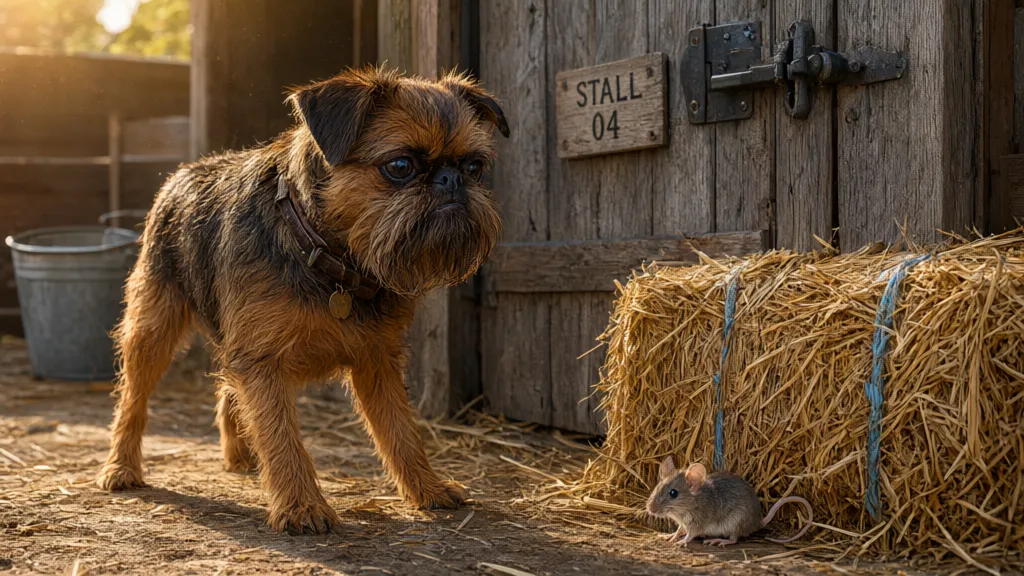
The Brussels Griffon developed in Belgium from small, rough-coated dogs kept around stables and carriage houses, where they helped control rats and accompanied coachmen. These early dogs were commonly called griffons d’écurie (“stable griffons”); they were working companions rather than a single, uniformly standardized breed.
The local rough-coated Smousje is generally regarded as a foundation type. During the 19th century, breeders crossed small Belgian dogs with imported toy breeds, including Affenpinscher-type dogs and, according to historical accounts, Pugs and English Toy Spaniels. The precise contribution of each ancestor is uncertain because early breeding records are incomplete. Selection gradually favored a compact body, a short, broad muzzle, expressive eyes, and a close attachment to people, while retaining the alertness expected of a small vermin-catching dog.
By the late 19th century, fanciers were exhibiting and recording these dogs in Belgium. The breed’s association with Brussels and royal patronage, particularly the interest of Queen Marie Henriette, helped raise its status beyond stable and carriage-house settings. Formal breeding produced related varieties distinguished chiefly by coat: the rough-coated Brussels Griffon and Belgian Griffon, and the smooth-coated Petit Brabançon. Kennel-club naming and classification differ by country, so these varieties may be grouped under one breed or treated separately.
This history helps explain the breed’s combination of vigilance and close human orientation. A dog selected to notice rodents and activity in busy stables could be quick to alert and responsive to movement, while generations of life alongside people favored sociability and proximity. These tendencies are not guarantees of individual temperament; early socialization and reinforcement shape whether alertness becomes manageable observation or persistent barking, and whether attachment remains comfortable or develops into difficulty coping alone.

Nutramax Proviable Probiotics for Dogs & Cats, Sprinkle Capsules, 30ct | Probiotics for Cats and Dogs, Plus Prebiotics, Daily Gut Health Support Supplement, Multiple Strains, Sprinkle on Food
(as of November 20, 2026 23:55 GMT +00:00 - More infoProduct prices and availability are accurate as of the date/time indicated and are subject to change. Any price and availability information displayed on [relevant Amazon Site(s), as applicable] at the time of purchase will apply to the purchase of this product.)The Brussels Griffon is a small, squarely built toy dog, typically about 18–20 cm at the withers and 3.5–5.5 kg, although standards and individual sizes vary. The head appears large relative to the body, with a domed forehead, very short muzzle, undershot jaw, and prominent, forward-facing eyes. These features give the face its distinctive expression but also affect function: the shortened muzzle can restrict airflow, and exposed eyes are more vulnerable to irritation or injury than those of dogs with deeper-set eyes.
Rough-coated dogs have a dense, wiry outer coat with a softer undercoat and characteristic facial furnishings; regular combing and periodic hand-stripping or professional coat maintenance help preserve texture and limit matting. Smooth-coated Petit Brabançons have short, close hair and no beard. Coat colors vary by variety and registry, commonly including red, black, and black-and-tan. Their compact size does not make them physically robust: falls, rough handling, and collisions with larger dogs can cause significant injury.
Many Griffons monitor their surroundings closely and respond rapidly to movement, door sounds, or unfamiliar people. This alertness can be useful, but repeated barking is easily strengthened if people approach, speak to, or pick up the dog after each alarm. Teach a brief alert followed by a trained quiet behavior, and reinforce settling before the dog escalates. Gradual exposure to household sounds and visitors, paired with food at an intensity the dog can tolerate, is more effective than forcing greetings or correcting fear signals.
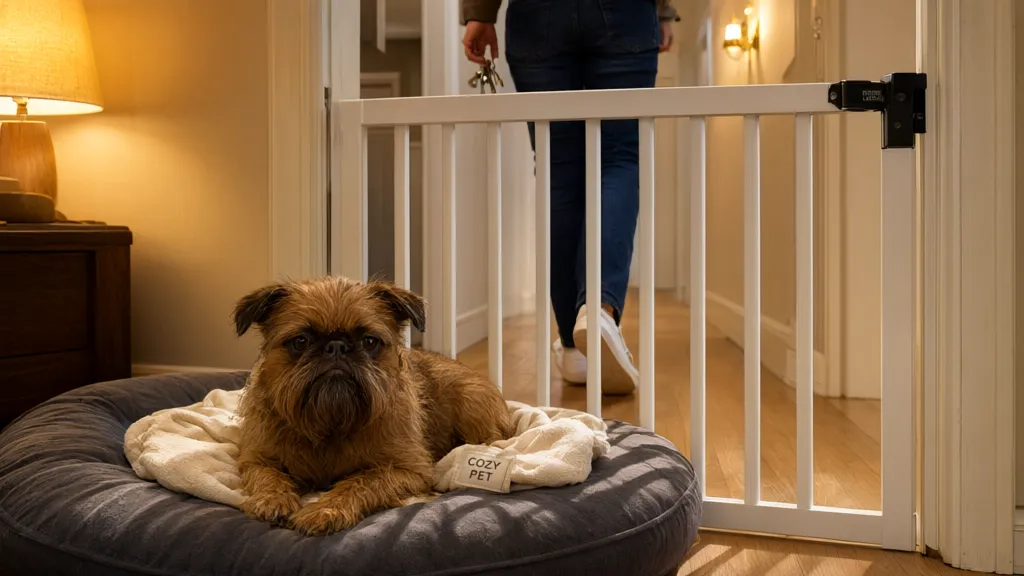
Close human orientation may make some individuals highly responsive to interaction and also less practiced at resting independently. Build short, predictable periods of separation into daily routines, rewarding calm behavior on a bed or behind a barrier before distress begins. Following people, whining, pacing, or refusing food when alone can indicate separation-related distress; increasing confinement or leaving the dog to “cry it out” may intensify the response. A veterinary behavior professional can help assess persistent cases.
Small size and facial expressiveness can prompt people to handle a Griffon continuously or excuse growling. Neither approach teaches safe social behavior. Allow the dog to move away, reinforce voluntary approach, and stop handling when the body stiffens, the head turns away, or the dog attempts to retreat. Use reward-based training in short sessions; these dogs can learn quickly, but abrupt restraint, intimidation, or repeated punishment may suppress warning signals without changing the underlying discomfort. Supervise interactions with children and larger dogs, and provide a protected resting area inaccessible to them.
The short muzzle can reduce the space available for airflow, particularly during exertion, excitement, or warm weather. Noisy breathing while awake, repeated gagging, exercise intolerance, prolonged recovery after activity, or collapse warrants veterinary assessment; these signs should not be dismissed as normal for this breed. Keep the dog lean, avoid strenuous exercise in heat and humidity, and use a harness rather than pressure on the neck. Labored breathing, blue or very pale gums, or heat-related weakness is an emergency.
Prominent eyes are susceptible to corneal scratches and ulcers, which may develop after rough play, contact with vegetation, or facial hair rubbing the eye. Squinting, tearing, redness, cloudiness, pawing at the face, or holding an eye closed requires prompt examination because corneal damage can progress quickly. Keep facial hair clear of the eyes and do not use human eye drops unless a veterinarian directs you to do so.
The undershot jaw and crowded teeth can make plaque accumulation and periodontal disease more likely in a small mouth. Begin tooth brushing early with dog toothpaste and a small, soft brush; inspect the gums and back teeth routinely. Persistent bad breath, gum redness, bleeding, difficulty chewing, or dropping food may indicate dental disease, even if the dog continues to eat. Professional dental cleaning is performed under anesthesia when indicated, with the veterinarian assessing the need for dental radiographs.
Small-breed dogs are prone to patellar luxation, in which the kneecap slips out of its groove. Intermittent skipping, briefly carrying a hind leg, or a stiff gait after rest merits examination; persistent lameness or pain needs timely care. Ask the breeder for documented health screening of breeding dogs, including evaluation of the patellas and eyes. A veterinary exam should also assess heart, airway, joints, body condition, and dental health; screening and follow-up should be tailored to the individual rather than inferred from appearance alone.
Maintain a lean body condition: excess weight increases respiratory effort and joint loading, while a small excess of treats can supply a substantial share of a toy dog’s daily calories. Measure the complete diet, account for training rewards, and adjust portions according to weight trend and body condition. Puppies and very small adults may be vulnerable to low blood sugar if they miss meals; weakness, tremors, disorientation, or collapse requires urgent veterinary attention.
Use several short, moderate walks and indoor play rather than prolonged exercise in heat. Check paws and breathing during activity, and stop if the dog slows, struggles to breathe, or fails to recover promptly. Rough-coated dogs need regular combing to prevent tangles, especially in facial furnishings and around the legs; inspect skin beneath dense hair for redness, odor, or sores. Smooth-coated dogs need less coat work but still benefit from routine nail, ear, skin, and dental checks.
Related Posts

Natural Ways to Relieve Your Dog’s Joint Pain
Dealing with Dog Food Intolerances and Sensitivities