Teaching Your Dog to Be Relaxed During Thunderstorms
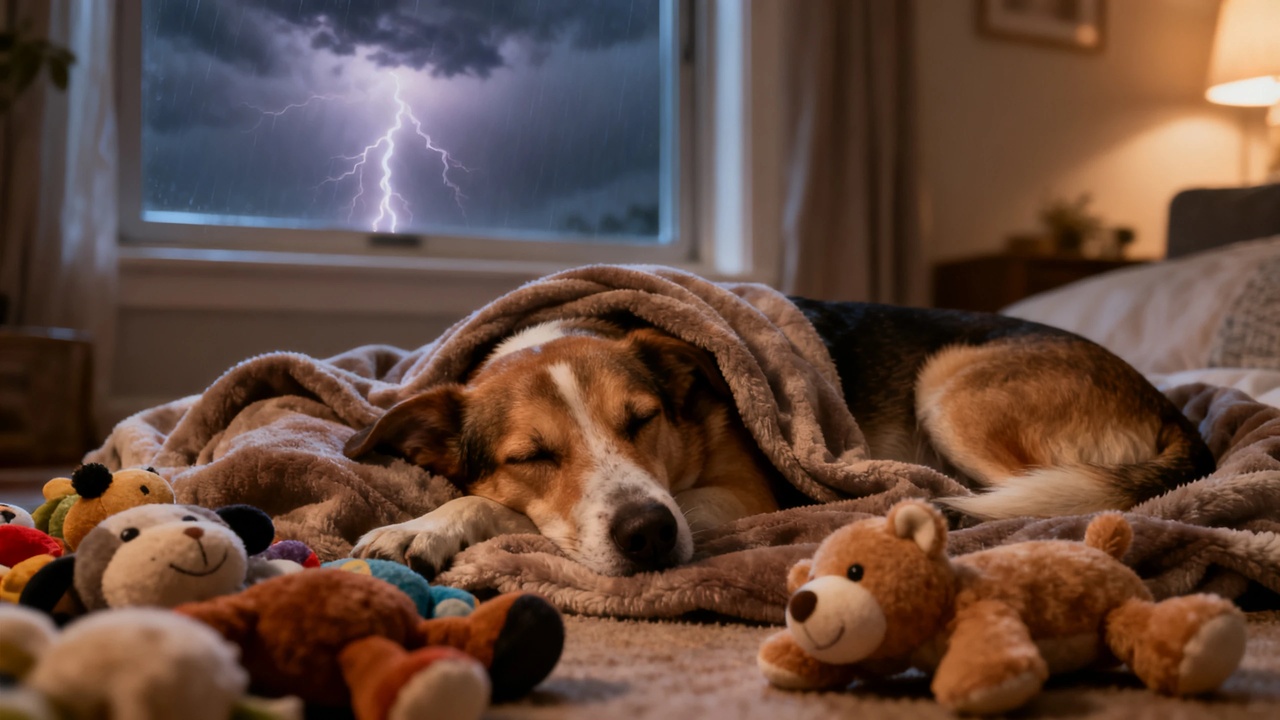
Thunderstorm anxiety is usually driven by a combination of noise phobia, barometric-pressure sensitivity, and anticipatory fear. Many dogs begin reacting before the first audible thunder because they detect distant low-frequency sound, static charge changes, and pressure shifts that precede the storm. The earliest signs are often subtle: scanning the room, pausing mid-activity, ears rotating repeatedly, a fixed stare toward windows or ceilings, and a sudden refusal to settle in a previously comfortable place. These dogs are not being disobedient; the nervous system is shifting from normal social engagement into a defensive state.
Progression typically follows a predictable pattern. Mild stress may look like lip licking, tongue flicks, yawning unrelated to fatigue, sniffing the floor, shaking off when not wet, panting without heat or exertion, and repeated repositioning. As arousal rises, the dog may pace in tight routes, seek physical contact, hide behind furniture, press into corners, or attempt to exit rooms with less acoustic buffering. Many individuals show a marked reduction in appetite during storms because sympathetic activation suppresses digestive activity and redirects blood flow away from the gut. Trembling, dilated pupils, lowered tail carriage, and a tense, crouched posture indicate that the dog is no longer simply alert but physiologically distressed.
Breed history strongly influences presentation. Herding breeds selected for constant environmental monitoring may fixate on approaching weather and show intense vigilance. Sighthounds often freeze, then bolt, because their startle threshold is low despite a quiet temperament. Guardian breeds may choose to stay close to the handler but still exhibit internal distress through panting, salivation, and restlessness. Dogs with a strong genetic tendency toward noise sensitivity, including many lines of shepherds, spaniels, and some toy breeds, frequently show earlier and more severe reactions. In puppies, storm fear often emerges after the startle threshold is repeatedly crossed during a sensitive developmental period; in seniors, cognitive decline, hearing changes, and reduced inhibitory control can make reactions more chaotic and difficult to extinguish.
Distinguish fear from pain or medical disease. If the dog becomes restless in multiple contexts, vocalizes when touched, cannot lie down comfortably, or has concurrent cough, tachypnea, collapse, or prolonged disorientation after the storm has passed, a medical cause must be considered. Acute distress can also manifest as destructive behavior aimed at doors, windows, or crates, which reflects escape motivation rather than intentional damage. Dogs that salivate excessively, defecate, urinate indoors, or attempt to tunnel into enclosed spaces are showing autonomic overload. The more rapidly signs escalate with each exposure, the more sensitized the response has become; repeated uncontrolled storms can strengthen the association and make later episodes more severe.

Amazon Echo Show 5 (newest model), Smart display, Designed for Alexa+, 2x the bass and clearer sound, Charcoal
$59.99 (as of October 2, 2026 09:08 GMT +00:00 - More infoProduct prices and availability are accurate as of the date/time indicated and are subject to change. Any price and availability information displayed on [relevant Amazon Site(s), as applicable] at the time of purchase will apply to the purchase of this product.)Observable warning signs that a dog is already beyond mild concern:
- Repeated seeking of exits, basements, bathrooms, or other acoustically buffered spaces
- Inability to respond to familiar cues because attention is captured by the environment
- Persistent panting, trembling, or drooling after the thunder has stopped
- Clinging, pawing, or frantic following of the handler with a rigid body
- Refusal of food that’s usually highly valued
- Escalating pacing, vocalization, or escape attempts with each storm exposure
The most useful assessment is to record the first 30 seconds of change, not the peak meltdown. Dogs that only shake during the loudest thunderclap may still be within a range that can be modified effectively; dogs that begin pacing at the first pressure shift need early intervention before the fear loop is fully activated. Recognizing the initial micro-signals allows management before catecholamine output rises enough to produce the classic panic pattern.
Calm behavior is built by changing the dog’s physiological association with storm cues, not by forcing endurance. The nervous system learns through repetition, timing, and outcome; if thunder is repeatedly followed by food, soft movement, and predictable distance from the source of fear, the brain can begin to classify the sound as low threat. This works best when the dog remains below threshold, meaning alert but not panicked. Once the dog is already in full sympathetic activation, learning is reduced and the session may reinforce avoidance instead.
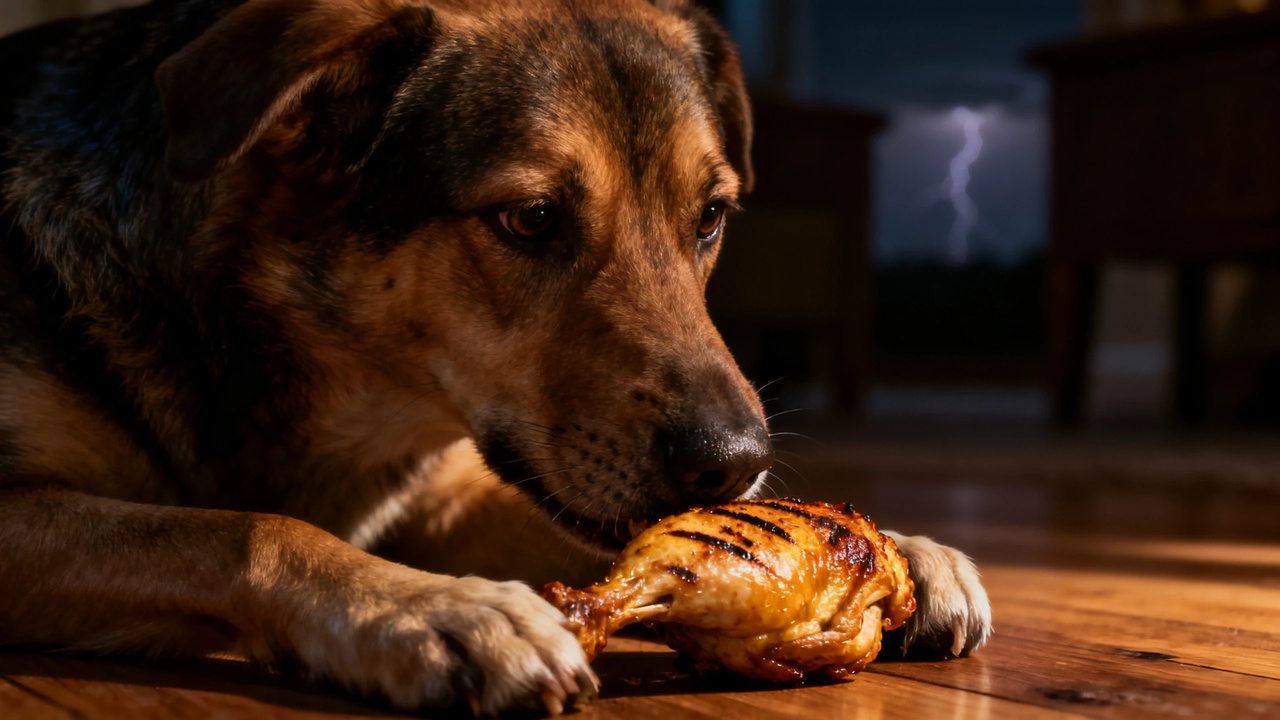
Counterconditioning is the core method. Present a very small storm-related stimulus, such as a low-level thunder recording or distant rumble, and pair it immediately with highly palatable food the dog does not receive at any other time. The food must arrive before the dog shows overt fear, because the emotional state present at the moment of exposure is what becomes linked to the cue. Short exposures of 1 to 3 seconds are often more effective than long sessions, especially in sensitized dogs. If the dog stops eating, increases scanning, or moves away, the intensity is too high and the stimulus should be reduced.
Desensitization requires precise control of volume, distance, and duration. Sound tracks should be played through speakers that preserve the low-frequency component of thunder, because these frequencies are the most biologically salient. Start at a level so low that the dog can eat, sniff, or lie down without interruption. Increase only one variable at a time, and only after several calm repetitions. Real storms are not ideal training opportunities because barometric changes, lightning flashes, and unpredictable timing make the stimulus too complex for controlled learning.
Food choice matters because stress alters digestion and reduces motivation. Use soft, aromatic proteins with high immediate value: cooked chicken, sardine, liver paste, or commercial diets the dog already adores. In dogs with a history of gastrointestinal sensitivity, use a single-ingredient reward that’s well tolerated to avoid nausea, which can worsen aversion. Very anxious dogs may refuse food altogether, which is itself a useful sign that the stimulus level is too high or the dog is already over threshold.
Management details that improve training success:
- Play thunder audio during calm periods, not only during storms, so the cue is not predictive of panic
- Keep sessions brief and end before fatigue or vigilance increases
- Use a predictable resting place with acoustic buffering, such as an interior room, without confining the dog if confinement adds pressure
- Prevent exposure to visible lightning if flashes are a trigger, because visual input can intensify startle responses
- Avoid greeting, petting, or continuous verbal reassurance if it increases arousal; many dogs stay calmer with quiet presence and minimal social pressure
Physical postures that support regulation are low, soft, and non-blocking. A dog often calms faster when allowed to choose distance and orientation, especially side-on or partially turned away rather than face-to-face contact. Access to a den-like space may help if the dog enters voluntarily, but forcing entry can deepen the association with entrapment. For some dogs, lying under a table with open exits is more stabilizing than crates or closed rooms because the body can maintain escape options, which lowers defensive tension.
Daily stress load also influences progress. Dogs with chronic under-exercise, pain, irregular feeding, or inconsistent sleep have a lower threshold for noise phobia because baseline cortisol and autonomic reactivity are already elevated. Gentle sniffing walks, predictable routines, and adequate omega-3 intake may support general stress resilience, but supplements do not replace learning-based treatment. If the dog has concurrent arthritis, otitis, or dental pain, address those conditions first, because ongoing discomfort reduces the ability to remain calm during noise exposure.
For severe cases, combine behavior work with veterinary planning before storm season. Some dogs need situational medication to lower arousal enough for learning to occur; without that reduction, the brain cannot form new safe associations efficiently. The goal is not sedation alone, but creating a window in which the dog can remain aware, eat, and process the stimulus without panic. Persistent self-injury, escape behavior, or refusal to recover after storms indicates that a structured behavior plan and medical support are both warranted.
Related Posts

Puppy Pads with Pheromones
Coping with Canine Diabetes – Managing Blood Sugar Levels