Beauceron
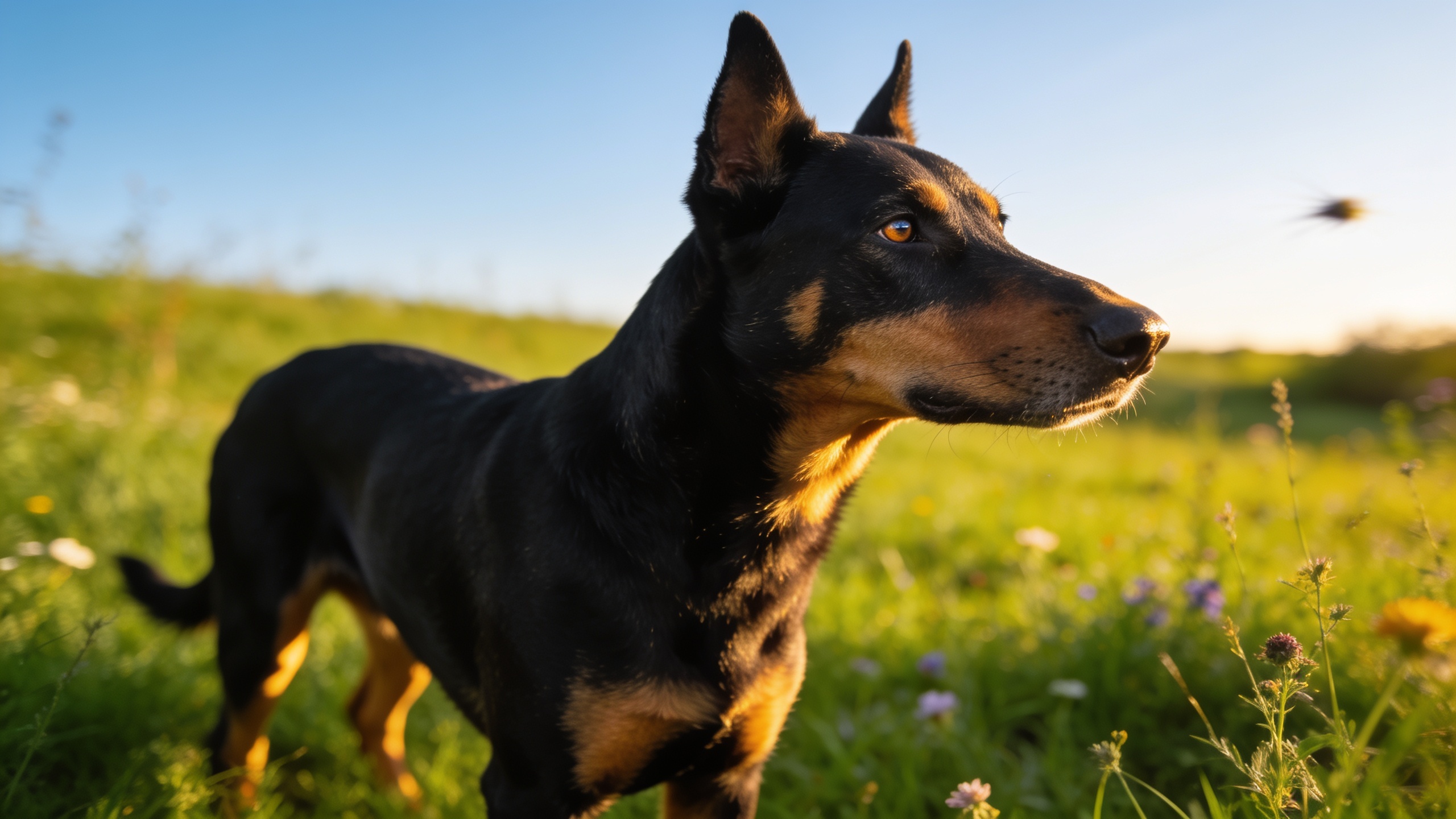
Despite the name, the Beauceron is not a cat breed but a large French herding dog developed for driving and guarding livestock. Selection favored animals that could work at distance from the handler, make independent decisions, and switch rapidly between controlled movement and defensive response. That combination produced a dog with high motor drive, strong environmental scanning, and a low threshold for reacting to movement, all of which are adaptive in stock work but can create management problems in urban homes if daily work and structured outlets are absent.
The breed’s behavioral profile reflects its origin as a multipurpose farm dog and later military and police partner. It tends to be intensely bonded to a small social group, vigilant around unfamiliar people or dogs, and highly responsive to contingencies that are clear and fair. Because this breed was selected for persistence rather than compliance for its own sake, it often tests whether cues are meaningful; inconsistent handling can quickly produce selective listening, conflict behavior, or anticipatory guarding of resources, doorways, and property.
Genetically and functionally, the Beauceron sits near the robust, high-arousal end of the herding spectrum. Many individuals show pronounced prey and chase responses, strong spatial awareness, and a need to control the movement of animals, vehicles, or children. That is not stubbornness in the casual sense; it is an inherited problem-solving style that prioritizes pattern detection and action. Owners typically see the earliest signs in puppyhood as intense orientation to motion, difficulty disengaging from triggers, and a tendency to patrol boundaries or shadow family members.
Working aptitude is usually broad rather than narrow. A well-managed Beauceron can excel in herding, scent work, tracking, obedience, rally, and protection sports when training is precise and reinforcement-based. The same cognitive traits that support trainability also make this breed prone to overarousal if sessions are too long, too fast, or too repetitive. Training is most effective when it channels the dog’s need for responsibility into defined tasks, with clear criteria and predictable outcomes.

Nutramax Proviable Probiotics + Prebiotics, for Dogs & Cats, Capsules, 80ct | Probiotics and Prebiotics for Cats and Dogs, Daily Gut Health Support Supplement, Multiple Strains, Sprinkle on Food
$44.99 (as of October 10, 2026 10:12 GMT +00:00 - More infoProduct prices and availability are accurate as of the date/time indicated and are subject to change. Any price and availability information displayed on [relevant Amazon Site(s), as applicable] at the time of purchase will apply to the purchase of this product.)From a welfare standpoint, this breed is poorly suited to sedentary, undersocialized lifestyles. Chronic frustration often appears as hypervigilance, nuisance barking, fence patrolling, shadowing, mouthing, or rough use of the body during play. In puppies and adolescents, the combination of size, confidence, and delayed emotional maturity means that early impulse control training, structured exposure to surfaces, sounds, traffic, handling, and strangers is essential to prevent later reactivity. The goal is not suppression of drive but development of off-switches, because a Beauceron that cannot recover after stimulation is far more likely to develop behavior problems than one that is simply energetic.
In the breed, behavior is shaped less by willingness to please and more by a strong internal job ethic: if the dog does not have a clear job, it will often invent one.
The Beauceron is a large, powerfully built dog with a rectangular outline, giving slightly more body length than height. Adult dogs typically stand about 65 to 70 cm at the shoulder, with females somewhat smaller, and the frame is dense rather than coarse. The breed’s architecture reflects its livestock-driving function: substantial bone for endurance and collision resistance, a deep chest for aerobic work, and a broad, muscular neck and shoulder assembly for pushing, turning, and braking during movement control. That is a dog designed for sustained force production, not sprint-only athleticism.
The head is long and clean rather than heavy, with a moderately broad skull, a defined stop, and a strong muzzle that tapers only slightly. This proportions support gripping and directional control without the exaggerated jaw mass seen in some guarding breeds. Eyes are dark and alert, with an expression that often appears intense because of the breed’s visual focus and constant environmental monitoring. Ears are traditionally natural, set high, and carried semi-erect or dropped; the ear set contributes to the alert outline but does not define temperament. The tail is long and reaches the hock, typically carried low at rest and raised with activity, which helps visually communicate arousal and intent.
The coat is short, harsh, and close fitting, with a dense undercoat that provides weather resistance rather than insulation for extreme cold. In the classic variety, the black-and-tan pattern is marked by distinct tan points on the face, chest, limbs, and underside of the tail; another recognized pattern is harlequin, where blue-gray and black are intermingled with tan points. Coat color has no proven relationship to temperament, but pigmentation in the breed is relevant to congenital health screening because some color-linked lines can carry inherited eye or coat abnormalities depending on ancestry. The coat sheds seasonally and requires only functional grooming, yet skin problems should not be dismissed as trivial because dense, weatherproof coats can conceal early dermatitis, hot spots, or ectoparasites until lesions are advanced.
Feet are compact and well arched, with tough pads suited to rough terrain and long distances. The forelimbs should be straight with strong pasterns, and the hindquarters must be well angulated but not exaggerated, because the breed needs drive and stability rather than flashy extension. Overangulation increases the risk of inefficient movement and fatigue; underangulation reduces rear propulsion and can compromise work endurance. Gait should be elastic, ground-covering, and efficient, with minimal wasted vertical motion. Any paddling, weaving, cow hocks, crossing, or short-stepping can indicate structural imbalance or pain, especially in adolescent dogs under rapid growth stress.
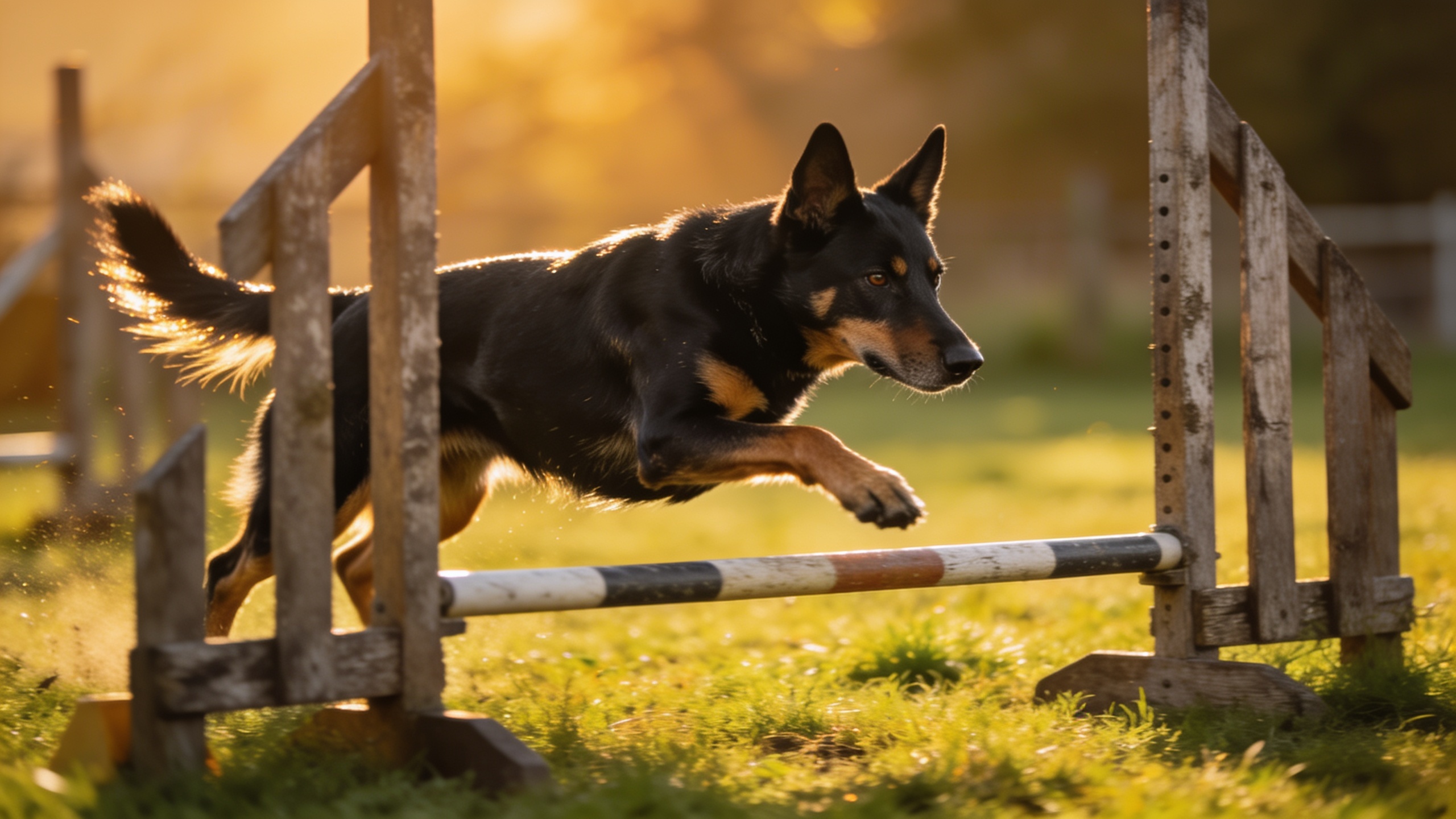
Musculoskeletal development is a major management issue in large working breeds. The Beauceron’s growth plates close later than those of small dogs, so excessive jumping, repetitive high-impact exercise, or uncontrolled stair use during the first 12 to 18 months can increase the risk of orthopedic injury. Because this breed is athletic and often unwilling to self-limit, lameness may present subtly as reduced willingness to turn tightly, sit asymmetrically, lag on walks, or choose down positions instead of standing. Hip dysplasia, elbow dysplasia, cruciate disease, and osteochondral lesions are the main structural problems to monitor, particularly in lines with heavy selection for size without equal attention to function.
The breed’s body condition should remain lean enough that ribs are palpable without excess pressure and the waist remains visible from above. Extra weight is not cosmetic; it increases joint loading, reduces heat tolerance, and amplifies fatigue in a dog already built for sustained work. In practice, a fit Beauceron should look muscular, not bulky, with firm abdominal tone and visible hindquarter definition. Dogs that become soft through overfeeding or inactivity lose the very structural advantage that makes the breed effective and sound.
The Beauceron’s temperament is shaped by a high threshold for social novelty but a low threshold for movement-based triggers. Many individuals are calm in familiar routines yet switch instantly to surveillance mode when a person, animal, or object behaves unpredictably. That state change is mediated by herding selection: the dog is rewarded by controlling motion, so hesitation, staring, circling, and body blocking are not random quirks but fragments of an inherited motor sequence. If those behaviors are accidentally reinforced by retreating children, reactive dogs, or repeatedly moving livestock, the pattern strengthens quickly.
Early socialization must be broad, not merely frequent. The critical goal is to teach the young dog to process new stimuli without escalating arousal. Exposure should include handling of feet, ears, mouth, and tail; varied surfaces; moving vehicles; hats, canes, bicycles, and wheelchairs; and calm, nonintrusive contact with unfamiliar people of different ages and body types. A Beauceron this is only “introduced” to novelty, but never reinforced for settling in its presence, may still become vigilant rather than truly confident. Overexcitement in adolescence is common because the breed’s physical maturity outpaces emotional regulation.
Training works best when it is contingent, concise, and behaviorally precise. The breed learns quickly through marker-based reinforcement, but it also detects inconsistency immediately, so criteria must remain stable across handlers. Avoid long repetitions of the same cue, because repetition without meaningful reward often produces disengagement or anticipatory error. Short sessions that end before arousal rises are more productive than demanding sustained compliance. For impulse control, train default behaviors such as stationing on a mat, orienting to the handler when motion appears, and disengaging from triggers on cue; these skills directly reduce chasing, fence-running, and doorway guarding.
Physical exercise alone does not meet the breed’s welfare needs. Aerobic outlets should be paired with cognitive work that requires pattern recognition, scent discrimination, problem solving, or directional control. If exercise becomes only free running, the dog may become fitter but not calmer. A Beauceron that lacks task structure often creates its own priorities: patrolling windows, shadowing family members, monitoring fences, or initiating rough play. These behaviors usually increase when the dog is under-stimulated, under-slept, or exposed to constant environmental noise.
Because of the breed’s size and self-confidence, adolescent management matters more than forceful correction. Physical confrontation tends to increase defensive responses and can suppress communication until the dog is already highly aroused. Clear boundaries work better when they are built through predictable reinforcement, environmental control, and early interruption of rehearsal. Signs that the dog is exceeding its coping capacity include fixed staring, slowed response latency, tight mouth, piloerection, sudden vocalization, grabbing at sleeves or leash, and difficulty lying down after stimulation. Those are not “dominance” signals; they are markers of stress and failed regulation.
Nutrition should support lean mass without accelerating growth. Large-breed puppies benefit from controlled calorie intake and balanced calcium and phosphorus rather than calcium supplementation, because excess mineral intake can worsen developmental orthopedic disease. Adult dogs doing real work may need higher protein and fat than sedentary companions, but ration increases should track workload and body condition, not age alone. A Beauceron this is overconditioned will show reduced stamina, heavier footfall, and reluctance to jump or pivot before obvious lameness appears.
Grooming and handling are also behavioral tools. Brief, frequent coat checks help detect skin irritation, ticks, ear debris, interdigital injury, and seasonal shedding problems before they become painful. Nail length matters because long nails alter paw placement and increase stress on shoulders and hocks, especially in a dog built for fast directional changes. A stable routine for examination, rest, work, and feeding reduces uncertainty, which is especially valuable in a breed that prefers to monitor rather than submit blindly.
Related Posts
Snuggle Puppy
Senior Dog Care – Tips for a Happy and Healthy Old Age