Dealing with Canine Phobias – Strategies for Overcoming Fears

A canine phobia is an intense, persistent fear response to a specific trigger—such as thunder, fireworks, vehicles, strangers, or veterinary handling—that is disproportionate to the immediate danger and can disrupt normal behavior. Fear becomes phobic when the dog’s alarm response is readily activated, difficult to interrupt, or increasingly generalized to related sounds, places, people, or situations.
Learning history is a frequent cause. In classical conditioning, a frightening event paired with a sound or setting can make that cue predict danger; the association may form after a single severe experience. A dog startled by fireworks while outdoors, for example, may later react to distant pops, nighttime darkness, or the location where the event occurred. Repeated exposure does not necessarily reduce fear: when the stimulus is too intense, the dog may become more sensitized rather than habituated.
Inherited temperament affects vulnerability, but no breed is destined to develop a phobia. Genetic differences influence startle sensitivity, recovery after stress, and behavioral inhibition. Selective breeding for vigilance, rapid responsiveness, or independence may affect how some working and herding dogs respond to sudden or unpredictable stimuli. Early environment also matters: limited, frightening, or poorly controlled exposure during puppy development can leave a dog less prepared to cope with novelty. Socialization is not simply exposure; the experience must remain safe enough for the puppy to recover and learn.
Medical and sensory factors can initiate or intensify fear. Pain may make handling, movement, or approaching another animal threatening; declining vision or hearing can make surprises more frequent. Neurologic disease, cognitive decline in older dogs, and some endocrine or other systemic disorders can alter reactivity or recovery. A sudden onset, marked escalation, or fear linked to touch or movement warrants veterinary assessment before treating the problem as purely behavioral.

Greenies Pill Pockets Large Size Dog Treats, Peanut Butter, 15.8 oz | Vet-recommended, masks pill smell & taste, moldable texture, capsule size, natural ingredients, no fillers, 15.8 oz. pouch
(as of November 13, 2026 22:22 GMT +00:00 - More infoProduct prices and availability are accurate as of the date/time indicated and are subject to change. Any price and availability information displayed on [relevant Amazon Site(s), as applicable] at the time of purchase will apply to the purchase of this product.)Phobias can persist because avoidance brings immediate relief. If a dog escapes a noisy room, the reduced distress reinforces escape behavior, while the feared cue remains unchallenged. Punishment, forced proximity, or restraining a panicking dog can add threat and strengthen the association. Identify when the response began, the exact triggers and their distance or intensity, recovery time, and any recent changes in health or environment; these details help distinguish a learned fear from a medical contributor and guide safe treatment.
Fear is not always expressed as barking, growling, or attempted escape. Early signs may be subtle: the dog turns the head or body away, avoids eye contact, lowers the posture, tucks the tail, pins the ears back, licks the lips, yawns, pants when not hot, or suddenly sniffs the ground. These displacement behaviors can signal conflict or rising stress, especially when they appear repeatedly around a particular sound, person, object, or location.
Watch the whole body and the sequence of changes rather than relying on one gesture. A relaxed dog moves fluidly and can disengage from a trigger; a distressed dog may become tense, crouch, tremble, pace, cling, hide, scan the environment, or refuse food it normally values. A closed mouth, weight shifted backward, dilated pupils, visible whites of the eyes, and a tail held low or tightly tucked can indicate increasing alarm. Tail wagging alone does not establish comfort; a stiff, rapid wag may accompany high arousal.
At greater intensity, a dog may freeze, bolt, attempt to climb or dig through barriers, vocalize, snap, or bite. Freezing is often mistaken for calm compliance, but immobility can be a defensive response. A dog that cannot escape may progress from freezing to defensive aggression; do not interpret a growl or air snap as defiance or punish the warning. Increase distance and reduce pressure without grabbing, cornering, or forcing contact.
Stress can also produce physiological and behavioral changes: drooling, panting, trembling, urination, defecation, vomiting, loss of appetite, or inability to settle. Some dogs remain distressed after the trigger disappears, showing prolonged vigilance, pacing, hiding, or reluctance to enter the affected area. Record the trigger, its distance or volume, the first visible signal, the dog’s response, and recovery time; these observations reveal whether the fear is escalating and help a veterinarian or behavior professional assess severity.
Interpret signs in context because pain, nausea, heat, respiratory disease, and sensory impairment can resemble or amplify anxiety. Seek veterinary evaluation for abrupt behavioral change, new sensitivity to touch or movement, repeated panic episodes, self-injury, escape attempts, or fear that interferes with eating, sleeping, elimination, or routine care. A dog that appears quiet but remains rigid, avoids the trigger, or cannot recover may still be experiencing substantial distress.
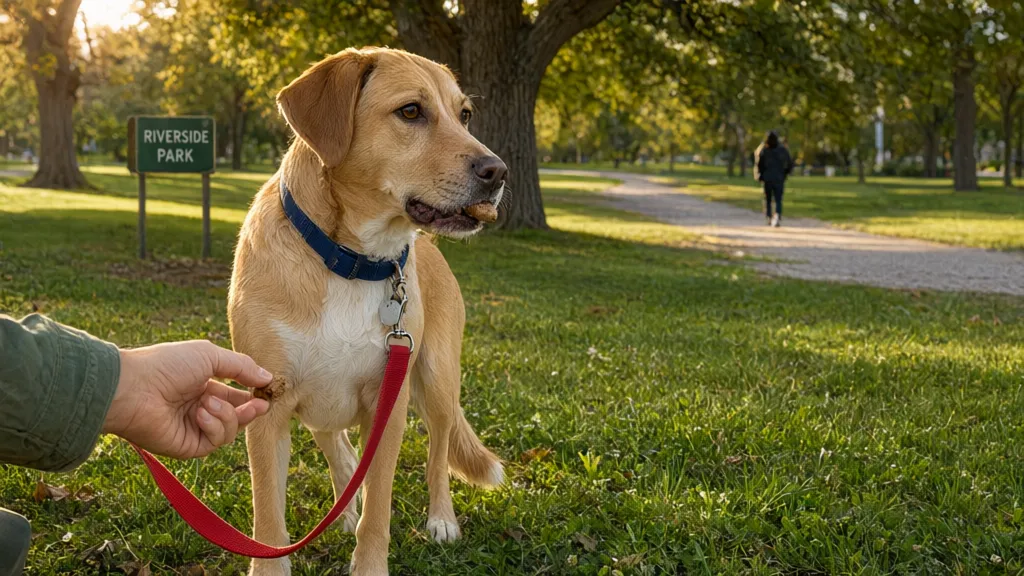
Build confidence with systematic desensitization and counterconditioning: present the trigger at an intensity low enough that the dog notices it but can still eat, explore, and respond normally, then pair it with something the dog values. For a noise fear, begin with a recording at barely audible volume; for fear of strangers, start at a distance where the dog can watch without stiffening or retreating. The trigger predicts food, play, or another chosen reward, rather than being used to lure the dog closer.
Progress by changing only one factor at a time—volume, distance, duration, movement, or number of people—and make small adjustments across sessions. If the dog stops taking food, freezes, scans intensely, pants, hides, or tries to escape, the exposure is too difficult: reduce intensity or end the session and allow recovery. These signs indicate distress, not stubbornness. Do not use flooding, in which a dog is held near a strong trigger until it stops reacting; immobility may reflect shutdown, and overwhelming exposure can strengthen the fear association.
Keep practice brief and predictable, ending while the dog remains comfortable rather than waiting for signs of fatigue or escalation. Use high-value rewards suited to the individual; a dog that will not eat may need more distance or a quieter setting, not more tempting food. Let the dog choose whether to approach, look away, or leave. Voluntary investigation and recovery after a mild startle are better measures of progress than proximity alone.
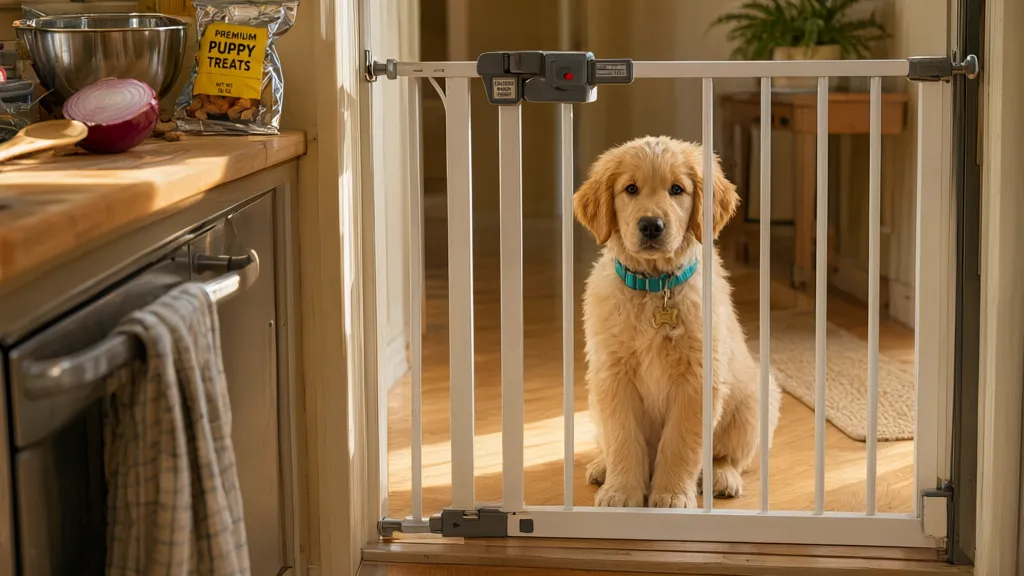
Prevent rehearsal of panic during training. For noise-sensitive dogs, provide an interior refuge, close windows and curtains, and use steady background sound; for trigger-specific fears, arrange walks and appointments to preserve distance and an exit route. Secure doors and gates because frightened dogs may bolt. Management reduces distress but does not replace carefully graded learning.
Use a written log of trigger intensity, distance, body language, food acceptance, and recovery time to guide progression. If fear is severe, generalized, worsening, or associated with escape attempts, aggression, or self-injury, consult a veterinarian and a qualified veterinary behavior professional. Medication may reduce excessive arousal enough for learning to occur; it should be prescribed and monitored by a veterinarian, alongside a behavior plan rather than as a substitute for one.
Related Posts
Brittany
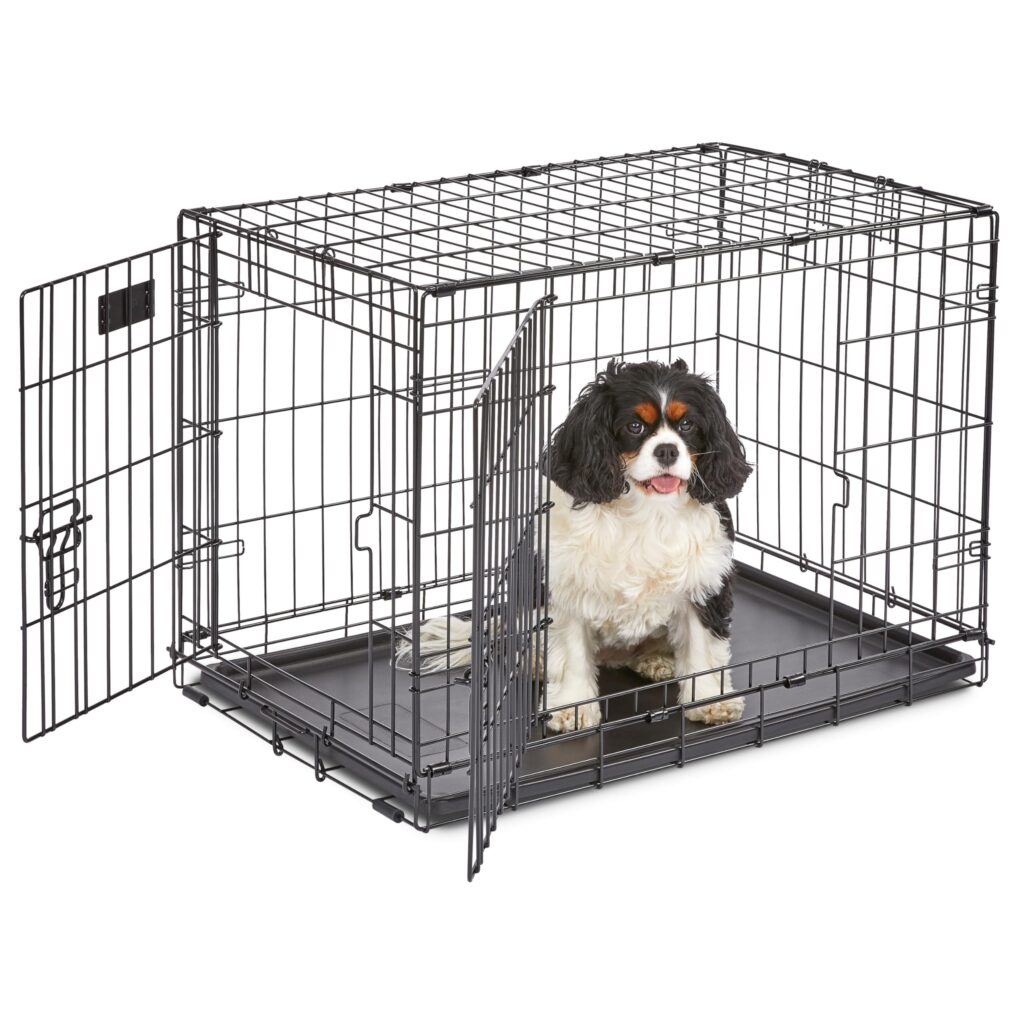
“MidWest Homes for Pets iCrate”