Briard
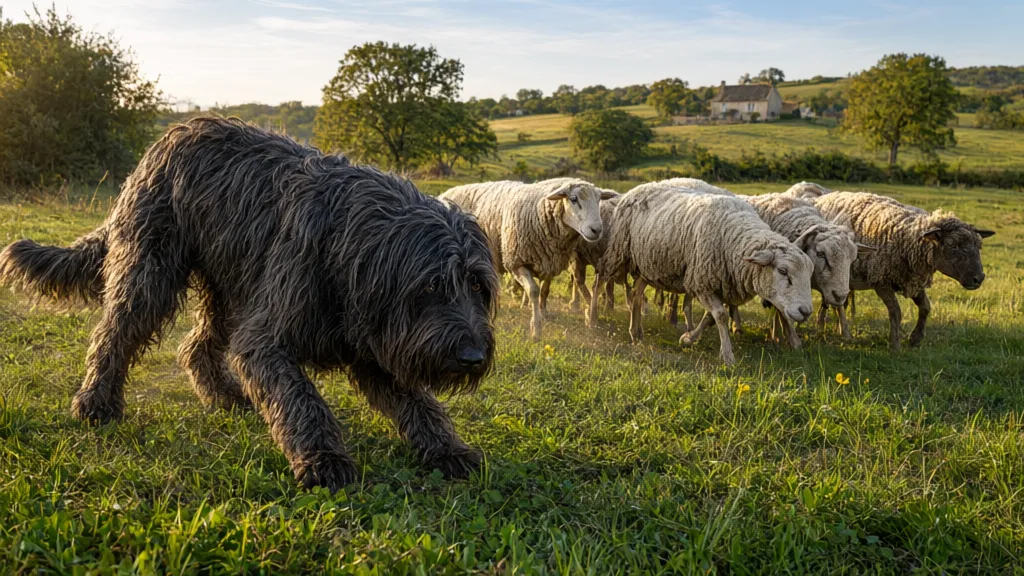
The Briard, known in France as the Berger de Brie, developed as a French working sheepdog used to move and guard livestock. Its name is associated with the Brie region, but the exact place and date of origin are uncertain; the name alone does not establish that this breed arose exclusively there. Briards belong to a broader tradition of regional French sheepdogs shaped by practical work rather than by a single documented breeding program.
Herding and flock protection demanded different abilities from the same dog. A Briard had to respond to a shepherd’s direction while making independent decisions when livestock strayed or predators threatened. Selection for stamina, vigilance, and close cooperation with a handler contributed to a capable, watchful working dog. Those demands help explain why Briards can be persistent and self-directed: these traits were useful when managing animals over long distances, but can require thoughtful guidance in modern settings.
For centuries, dogs of this type were valued as farm workers, but written records and standardized breed descriptions emerged comparatively late. At the first major French dog show in 1863, long-coated sheepdogs were shown before French breeders formally distinguished the Briard from other regional types. In 1893, veterinarian and breed authority Pierre Mégnin helped clarify the distinction between the Briard and the short-coated Beauceron. France’s first Briard standard followed in 1897, establishing a more consistent basis for breeding and exhibition.
During the First World War, Briards served with the French military as sentries, messengers, and search dogs locating wounded soldiers. Their usefulness under difficult conditions reflected their endurance, attentiveness, and ability to work in close partnership with people. Wartime losses and disruption reduced their numbers, and organized breeding afterward helped preserve the population. The breed’s later development has therefore balanced its agricultural and military working heritage with selection for a more uniform appearance and suitability for life as a companion.

Nutramax Cosequin Joint Supplement for Dogs, Chewable Tablets, 132ct | Glucosamine + Chondroitin for Dogs with MSM, Supports Healthy Joints, All Breeds & Sizes, All Ages
(as of November 4, 2026 20:06 GMT +00:00 - More infoProduct prices and availability are accurate as of the date/time indicated and are subject to change. Any price and availability information displayed on [relevant Amazon Site(s), as applicable] at the time of purchase will apply to the purchase of this product.)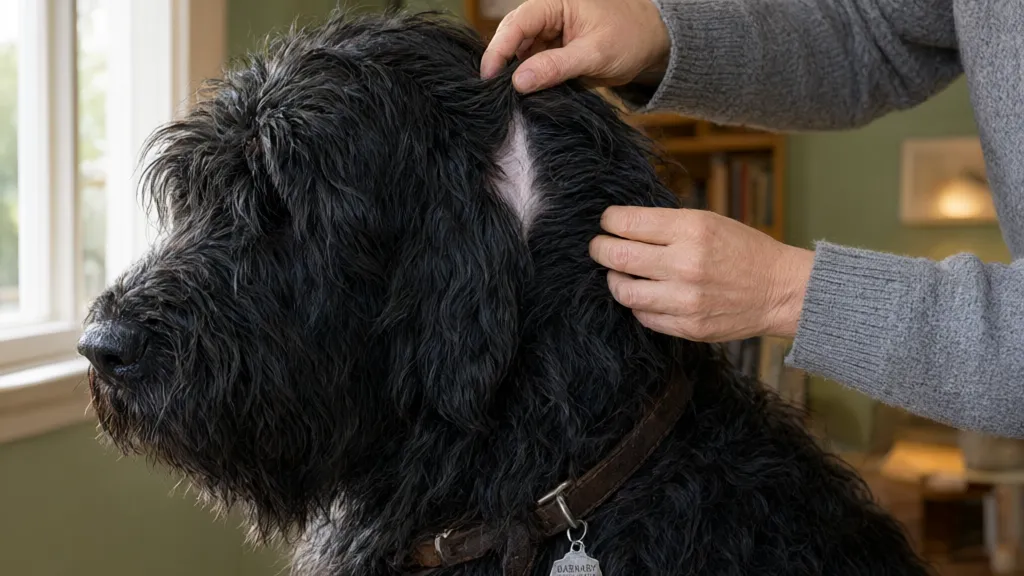
The Briard is a substantial, muscular dog with a slightly longer-than-tall outline, a long head, and a coat that gives a rugged rather than sculpted appearance. Breed-standard height is approximately 62–68 cm (24.5–27 in) for males and 56–64 cm (22–25.5 in) for females; adult weight varies considerably with frame and condition. A sound Briard moves with an efficient, ground-covering trot suited to sustained work, not with heavy, restricted steps.
The long, coarse outer coat is slightly wavy and lies over a finer undercoat. It occurs in black, gray, and fawn, with darker shading sometimes present in fawn dogs. The coat protects against weather and brush but traps loose undercoat, burrs, and moisture; inspect the skin and work through the coat to the roots during grooming, especially behind the ears, beneath the collar, in the armpits, and between the toes. Persistent mats pull on the skin and can conceal irritation or parasites. The long eyebrows and facial hair should not obstruct vision. The tail is carried low at rest and curves at the tip; double dewclaws on each hind leg are a characteristic feature and should be checked for overgrowth or injury.
Briards commonly form close attachments to their household and remain attentive to activity around them. Their livestock-working background favors vigilance, persistence, and independent action, so a dog may notice and investigate movement before responding to a cue. Some are reserved with unfamiliar people; this is not the same as fearfulness or aggression. Calm, positive exposure to varied people, animals, surfaces, and settings during development helps prevent watchfulness from becoming excessive suspicion. Forced greetings or punishment for warning signals can increase conflict rather than build confidence.
Training works best when the dog can predict which behavior earns reinforcement. Reward prompt orientation to the handler, settling after an alert, and disengaging from moving distractions; use short, varied practice because repetitive drilling can reduce engagement in a self-directed dog. Physical exercise alone does not meet the needs of a working breed: scent searches, structured herding activities, and problem-solving tasks provide appropriate outlets. A Briard that persistently patrols, barks at routine sounds, or struggles to settle may be receiving too little structured activity or may be responding to stress; assess the environment and behavior pattern rather than simply increasing exercise.
Related Posts

Homemade Dog Food – Recipes for a Healthier Pup

The Benefits of Homemade Dog Treats