Bracco Italiano
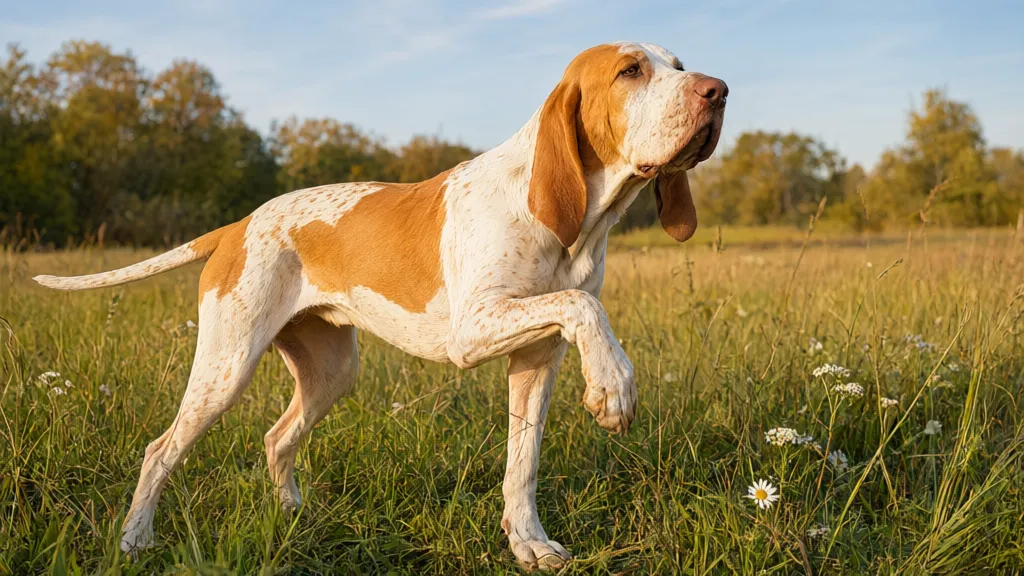
The Bracco Italiano is an old Italian continental pointing breed developed to locate game by scent, indicate its position with a fixed point, and work in coordination with hunters. Its precise ancestry is not documented; proposed links to ancient Italian scent hounds and imported mastiff-type dogs remain theories rather than established lineage. Its broad head, pendulous ears, and scent-oriented hunting method reflect selection for persistent field work, not simply appearance.
By the Renaissance, dogs identified with the Bracco type appeared in Italian hunting records and art associated with noble courts, including those of the Gonzaga and Medici families. Regional breeding produced two traditional forms: a lighter, more agile Piedmontese type associated especially with white-and-orange coats, and a heavier Lombard type often associated with brown roan. These distinctions reflected local terrain and hunting practice; they were not separate breeds.
Changes in hunting methods and declining demand for specialist gun dogs reduced the population, and by the early twentieth century the breed faced serious decline. Italian breeders organized efforts to consolidate regional lines and preserve working ability alongside a consistent type. The modern standard recognizes the Bracco as a versatile pointing dog, expected to search methodically, use its nose effectively, hold a steady point, and retrieve. The Fédération Cynologique Internationale recognized the breed in 1956.
That working history still shapes management: Bracchi generally need opportunities for sustained scent work and purposeful field activity, not just brief exercise. Selection for independent searching can also mean that reliable recall must be built gradually, with rewards delivered at a distance and practice in controlled environments before off-leash work. Preserving the breed’s function depends on breeding for sound movement, scenting ability, and stable working temperament rather than exaggerated physical features.

Blue Buffalo Bits Beef Training Treats, 19 oz | Real Beef First, DHA for Cognitive Development, No Chicken By-Product Meals, Free from Red Dye 40
(as of October 28, 2026 18:10 GMT +00:00 - More infoProduct prices and availability are accurate as of the date/time indicated and are subject to change. Any price and availability information displayed on [relevant Amazon Site(s), as applicable] at the time of purchase will apply to the purchase of this product.)The Bracco Italiano is a substantial, long-limbed dog, but it should not look cumbersome. Under the Fédération Cynologique Internationale standard, males stand 58–67 cm at the withers and females 55–62 cm; weight is generally 25–40 kg, proportionate to height and build. The body is close to square, with a deep, broad chest, strong back, muscular hindquarters, and enough bone to support prolonged field work. Excess weight or a heavy, short-striding build compromises endurance and increases mechanical load on the joints.
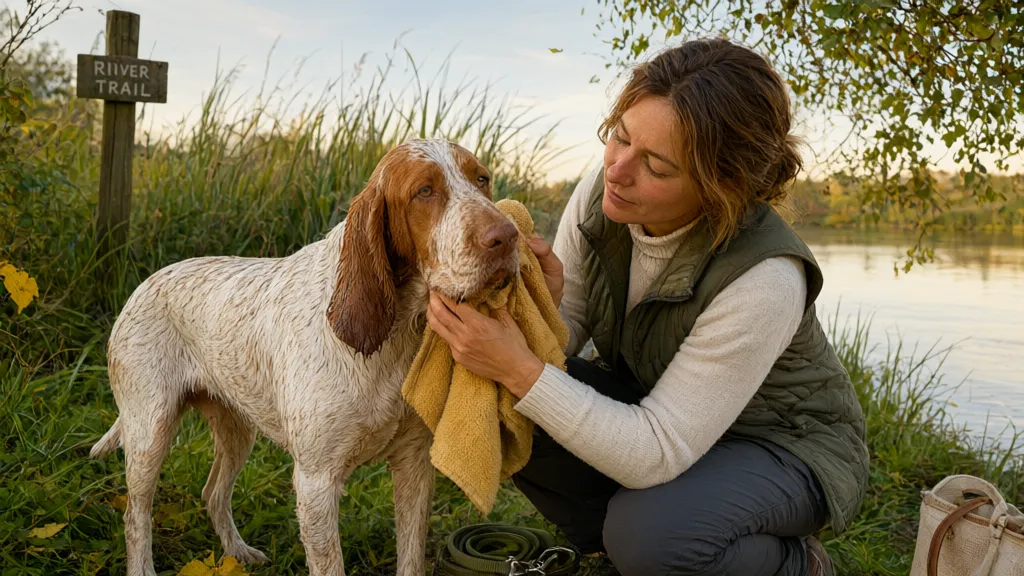
The head is long, with a lightly defined stop and a broad muzzle of approximately the same length as the skull. The large nose has open nostrils and pigmentation that corresponds to coat color. The upper lips hang over the lower jaw, forming the characteristic pendulous muzzle; loose lip tissue can retain moisture and food, so persistent odor, redness, or discharge merits examination. Long, low-set ears have rounded tips and may reach the nose when drawn forward. Their limited airflow can favor wax and moisture accumulation, particularly after wet field work.
Eyes are oval and range from ochre to dark brown, depending partly on coat color. The expression should be soft, not strained; eyelid edges that roll inward or droop markedly deserve veterinary assessment because abnormal lid position can irritate the cornea. The neck is strong and may show a modest dewlap, but excessive loose skin is not the aim. The tail is thick at the base and tapers toward the tip; where legally permitted, historical docking has been practiced, but natural tails are retained in many countries and are preferable where docking is prohibited or unnecessary.
The short, dense, glossy coat lies close to the body and requires little trimming. Accepted colors include white with orange or amber markings, white with chestnut markings, and corresponding roan patterns. Pigmentation generally harmonizes with the coat. The skin is relatively fine and may form folds at the head and neck, so owners should dry damp areas rather than leave them persistently wet.
Sound movement is a defining structural feature: the Bracco should cover ground with an extended, efficient trot and powerful hind-leg drive, without paddling, crossing, or visible stiffness. During puppy growth, maintain a lean body condition and avoid repetitive high-impact exercise; rapid weight gain and forced mileage increase stress on developing joints. Once mature, conditioning should build gradually so the dog’s substantial frame can sustain work without fatigue-related changes in gait.
The Bracco Italiano is typically people-oriented and cooperative, but its hunting heritage gives it a nose-led, self-directed working style. A dog following scent may become less responsive to distant cues, so use a long line until recall is dependable around wildlife and other strong distractions. Reward check-ins and returns immediately; repeated calling when the dog cannot disengage teaches that the cue can be ignored.
Training works best when it’s consistent, calm, and reward-based. Bracchi are often sensitive to handler pressure; harsh corrections can suppress initiative or make the dog wary without improving control. Build impulse control and handling tolerance in short sessions, then practise them around gradually increasing distractions. Scent searches, retrieving, tracking, and structured field work provide outlets for hunting motivation more effectively than relying on physical exercise alone.
Daily activity should include sustained movement and opportunities to investigate scents, adjusted for age, fitness, weather, and joint soundness. Puppies should not be pushed through repetitive jumping, long forced runs, or strenuous field sessions while growing. Adults that receive too little purposeful activity may become restless, vocal, or destructive. Because this breed generally seeks close human contact, prolonged isolation can also contribute to distress; teach brief, predictable periods alone gradually rather than leaving a young dog for a full workday without preparation.
Feed measured portions and monitor body condition by feel: ribs should be easy to detect beneath a light covering, and the waist should remain visible from above. Excess weight increases strain on hips, elbows, and other weight-bearing joints. Choose a complete diet appropriate to life stage; large-breed puppy food helps control growth rate during development. Divide an adult’s daily ration into meals if needed for appetite or digestion, and seek urgent veterinary care for a suddenly swollen abdomen, unproductive retching, restlessness, or collapse, which can indicate gastric dilatation-volvulus.
Check the long ears regularly for moisture, odor, redness, discharge, or repeated head-shaking, especially after swimming or wet field work. Clean only when needed with a veterinary-approved ear product; inserting cotton swabs can injure the canal. Wipe lip folds and dry them if persistently damp. Brush the short coat periodically and inspect paws and skin after outdoor work for cuts, seeds, or parasites.
Responsible breeders should provide documented hip and elbow assessments and appropriate eye examinations; ask about recurring orthopedic or eye disease in close relatives. A new limp, reluctance to rise, persistent eye irritation, or a marked change in thirst or urination warrants veterinary evaluation rather than being attributed to age or workload.
Related Posts
Canine Cognitive Dysfunction – Navigating Cognitive Decline in Dogs

How to Transition Your Dog to a New Diet Safely