Bedlington Terrier
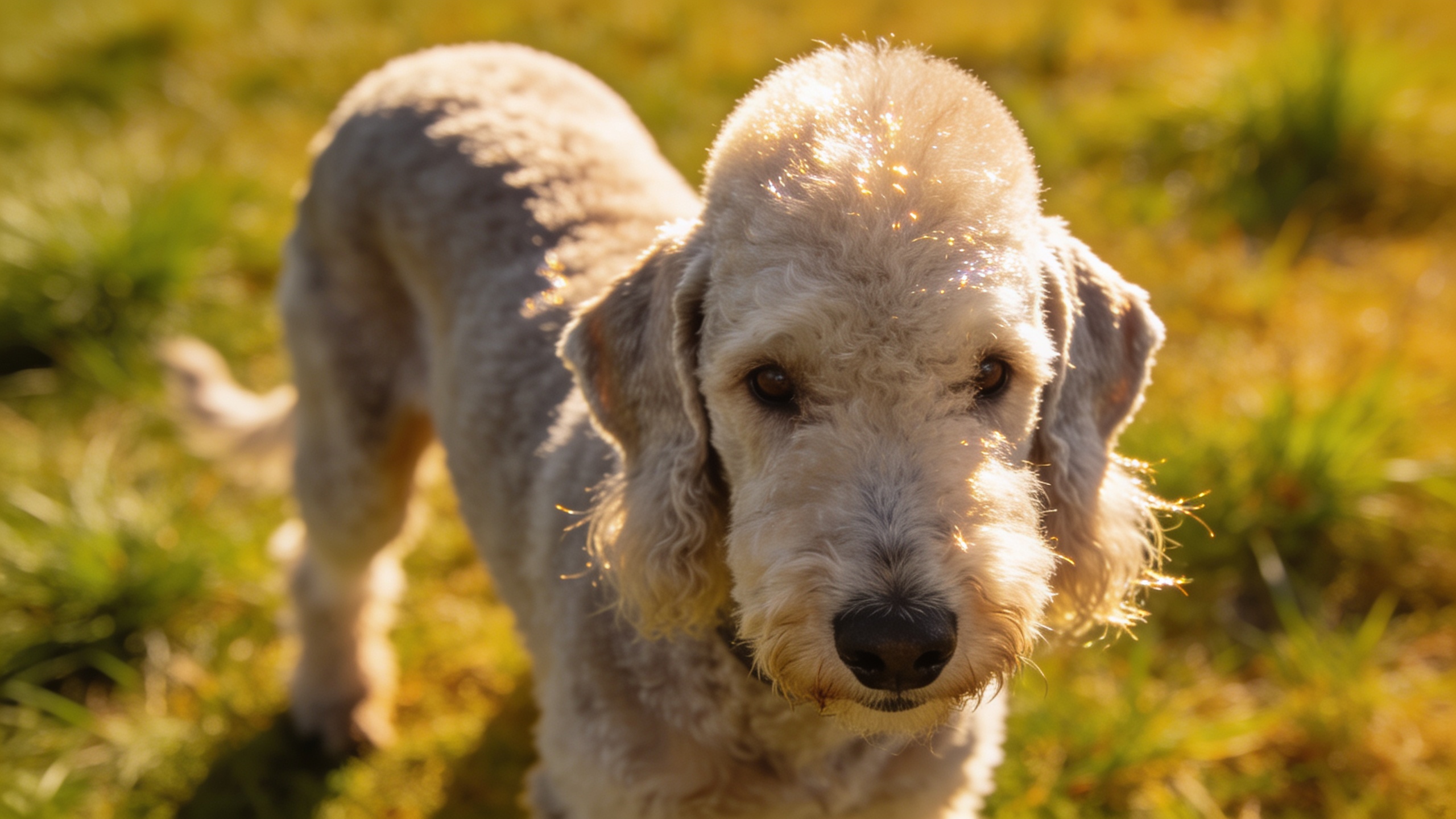
The Bedlington Terrier is a light-framed, deep-chested terrier with a distinctive arched topline, narrow skull, and pear-shaped head; this shape reflects selection for speed, agility, and the ability to follow quarry into tight spaces rather than brute force. The coat is a crisp, mixed texture of soft and harsh hair that grows continuously and sheds minimally, so it behaves more like a hand-strippable terrier jacket than a simple pet coat. This coat can obscure body condition, which makes rib palpation, loin assessment, and regular weighing more reliable than visual inspection alone.
Behaviorally, the breed often shows classic terrier drive: quick environmental scanning, high prey interest, rapid arousal, and persistence once a target is detected. Those traits are not accidental; they come from selection for vermin control, where split-second response and refusal to disengage improved work efficiency. In the home, that same motor pattern can appear as chase behavior toward squirrels, cats, small pets, or fast-moving objects, especially in juveniles and under-stimulated adults. This breed typically learns rapidly when reinforcement is immediate and concrete, but boredom can produce nuisance barking, digging, and self-directed occupations such as shredding, chewing, or escape attempts.
Many Bedlingtons have a sensitive threshold for social pressure; heavy-handed correction may suppress behavior temporarily while increasing avoidance, reactivity, or handler wariness. They tend to respond better to precise reward timing, short training sessions, and clear criteria than to repeated verbal correction. Their terrier independence can be misread as stubbornness, but the underlying issue is often competing motivation: if prey, movement, or scent is more reinforcing than the handler, compliance drops unless training history has built strong payoffs around attention and recall.
Physically, this breed is athletic but not heavily muscled, with a flexible gait that can cover ground efficiently. Puppies may appear more delicate than they’re, but rapid growth or excessive jumping can stress immature joints and soft tissues. Adult activity tolerance is generally good, yet intense bursts are more typical than prolonged endurance work, so conditioning should emphasize controlled repetition, coordination, and impulse control rather than sustained pounding on hard surfaces.

Greenies Pill Pockets Large Size Dog Treats, Chicken Flavor, 15.8 oz | Vet-recommended, masks pill smell & taste, moldable texture, capsule size, natural ingredients, no fillers, 15.8 oz. pouch
$19.96 (as of October 15, 2026 10:26 GMT +00:00 - More infoProduct prices and availability are accurate as of the date/time indicated and are subject to change. Any price and availability information displayed on [relevant Amazon Site(s), as applicable] at the time of purchase will apply to the purchase of this product.)Several inherited diseases shape how the breed should be evaluated. Copper-associated hepatopathy is a key concern because abnormal hepatic copper accumulation can progress silently for months or years before lethargy, poor appetite, vomiting, weight loss, jaundice, or abdominal discomfort become obvious. Progressive retinal atrophy can first show as night blindness, hesitation in dim light, or startle responses in low illumination. Lens opacity, orthopedic pain, and skin issues may be secondary rather than primary, so any change in activity, appetite, coat quality, or visual confidence deserves prompt assessment rather than assumptions about age or temperament.
From a genetic-management perspective, the breed’s unique combination of narrow phenotype and founder effects means that apparently minor mating choices can concentrate recessive disease risk. Screening of breeding stock for hepatic copper status, ocular health, and pedigree-linked disorders is essential because clinical normality in a young dog does not rule out carrier or preclinical status. In practical terms, the most useful phenotype clues are not the flashy silhouette alone but the way the dog moves, focuses, tolerates frustration, regulates arousal, and maintains weight, muscle, and coat without hidden metabolic or hepatic compromise.
Feeding should be calibrated to the breed’s lean, high-activity design rather than to coat volume or appetite alone. Because Bedlingtons can maintain a deceptively slim outline, rationing by “looks fine” commonly results in overconditioned dogs that lose abdominal tuck, reduce cardiac efficiency, and place extra load on the stifled limbs and thoracolumbar spine. Use measured meals, adjust calories by body condition score and weekly weight trend, and keep treats below 10 percent of daily intake. In copper-prone lines, avoid unnecessary organ-rich treats and high-copper supplements; the goal is not extreme copper deprivation, but prevention of chronic hepatic accumulation in dogs with abnormal handling of the mineral.
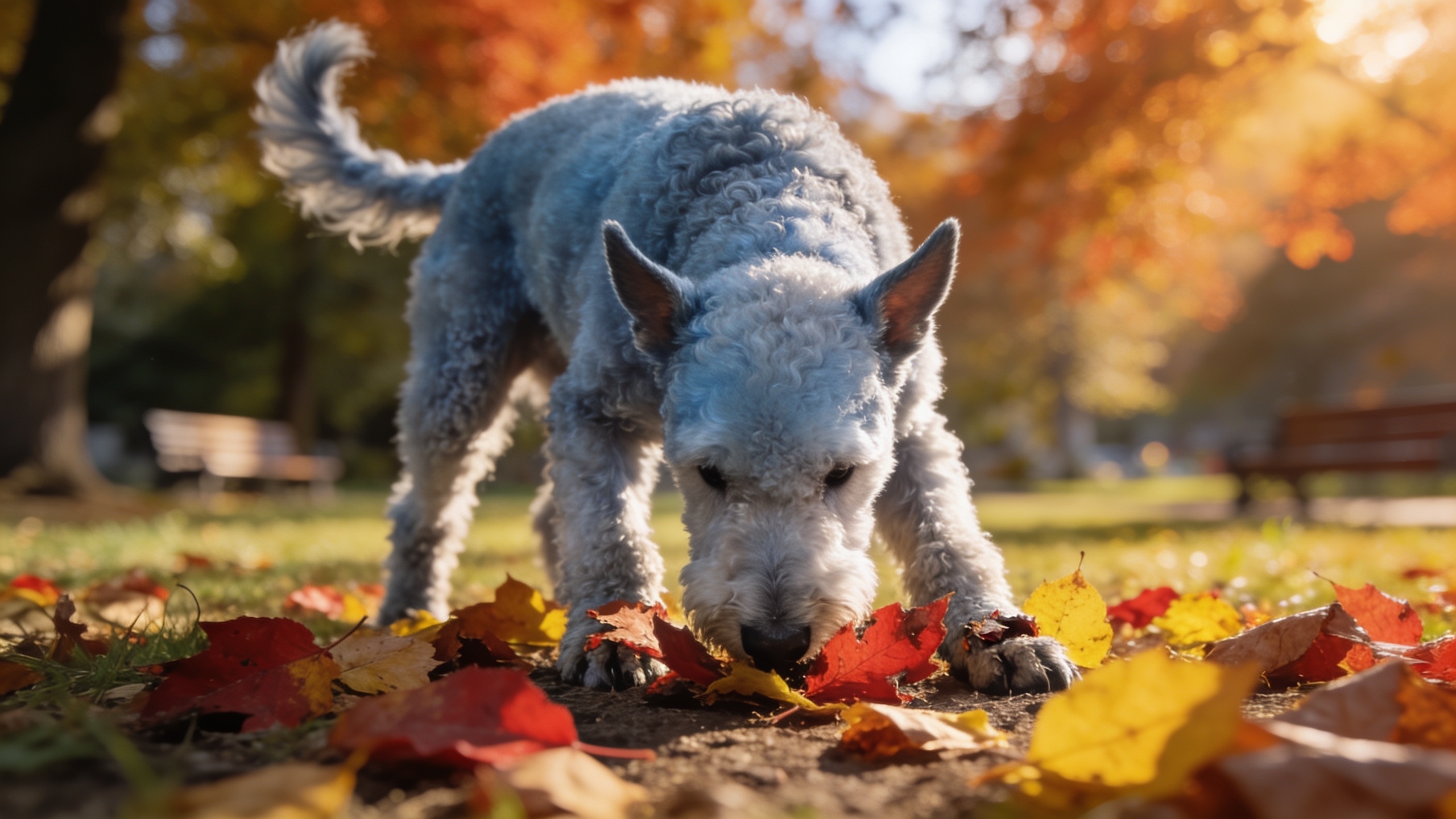
Exercise should satisfy prey drive, exploration, and problem-solving without rehearsing uncontrolled chase. Off-leash access is only useful if recall has been generalized under high arousal; otherwise long lines and fenced areas are safer because every successful pursuit strengthens the behavior. Short, frequent sessions of scent games, lure-to-target work, structured retrieve, and recall drills usually produce better regulation than unstructured marathon exercise. For juveniles, limit repetitive jumping and slippery-surface racing, since immature growth plates and soft tissues are vulnerable to strain even in a compact athlete.
Coat care is not cosmetic in the breed. The mixed texture must be maintained so the jacket remains weather-resistant and does not mat into a dense felt that traps moisture against the skin. Hand stripping preserves harsh outer hair and the correct skin microclimate; clipping softens the coat over time, reduces texture, and can make later evaluation of coat quality less informative. Watch for hidden dermatitis at the ear base, groin, axillae, and between the toes, where dense coat can mask erythema, yeast overgrowth, or self-trauma from itch.
Routine home monitoring should include weekly palpation over the ribs and waist, monthly body weight, inspection of gums and sclera for subtle jaundice, and attention to stool quality, which may change before overt liver signs appear. Reduced stamina, reluctance to jump, increased sleeping, or a dog that becomes “off” after meals can indicate pain or hepatic dysfunction long before dramatic illness. Eye checks matter because mild vision loss is often compensated by memorized routes, so hesitation in unfamiliar rooms, bumping in dim light, or reluctance to descend stairs may be the earliest clues.
Training should prioritize impulse control in contexts that trigger terrier reflexes: doorway exits, fence-line movement, wildlife scent, and fast-moving toys. Reward calm orientation to the handler before release, because self-control is built by reinforcing the pause, not by repeatedly demanding it after arousal is already high. Harsh leash corrections can provoke opposition or fear-based freezing in sensitive individuals; cleaner results come from managing the environment, setting predictable criteria, and using reinforcement that competes effectively with the target stimulus.
- Use a secure harness for management during adolescence; neck pressure can increase opposition in a dog already inclined to fight restraint.
- Keep nail length short enough to preserve foot stability, especially in a narrow, agile dog that relies on traction and precise turning.
- Schedule periodic ophthalmic and hepatic screening in clinically normal adults, because both visual and liver disease may be subclinical early.
- Reinforce return-to-handler behavior around movement triggers before expecting reliable off-leash freedom.
- Monitor for repeated scratching, head shaking, or paw licking, since these often represent dermatologic or otic irritation rather than “bad manners.”
The breed’s development in northeastern England was driven by practical vermin control in mining and farm communities, where a small but determined terrier had to enter burrows, pursue quarry underground, and still remain agile enough to work above ground. That functional selection favored a dog with enough leg length for efficient ground cover, enough flexibility for turns in confined spaces, and enough grit to persist when scent, noise, or injury would stop a softer animal. The characteristic arched back and narrow frame were not decorative inventions; they reflect a body built to combine speed with penetration into tight cover.
Early Bedlingtons were shaped by local working needs more than by standardized show criteria, so the population likely contained a mix of coats, sizes, and temperaments before breed formalization. As kennel club recognition and breed uniformity increased, selection gradually emphasized the distinctive silhouette, topknot, and lamb-like outline, while retaining the terrier’s essential hunting temperament. This type of selection can intensify both visible traits and hidden liabilities: once a small gene pool is repeatedly closed around a preferred look, recessive disorders and breed-linked metabolic problems can rise in frequency even when the dogs appear outwardly similar and sound.
The breed’s historical work pattern helps explain its modern behavior. A dog expected to hunt independently needed to make quick decisions, ignore distraction, and continue until the task was completed, so today’s Bedlington often shows strong self-directed motivation, fast environmental sampling, and a lower tolerance for dull repetition. In breeding terms, those traits were advantages; in a household, they can become problems if the dog’s drive has no constructive outlet. That’s why lines selected primarily for appearance may still carry intense prey focus, and why underestimating this breed as merely soft-coated or mild-mannered leads to management failures.
Genetic bottlenecks also matter in this breed’s medical history. Copper-associated hepatopathy became a defining concern because affected dogs may have inherited altered hepatic copper handling that was silently amplified by repeated use of related breeding stock. The disease is not caused by “eating too much copper” alone; the underlying issue is impaired excretion and accumulation in the liver, with oxidative injury progressing until clinical decompensation. That same principle applies to ocular and orthopedic conditions: if selection narrows the gene pool, the breed may preserve type while losing robustness, so historical popularity and closed registries can have direct consequences decades later.
For that reason, responsible breeding history in Bedlingtons is inseparable from screening history. Families and breeders who tracked liver enzymes, copper status, and eye health contributed more than individual disease prevention; they helped map which lines were preserving function without concentrating pathology. The most informative ancestral records are not just champion titles, but patterns of longevity, hepatic health, vision into old age, and whether dogs remained physically and behaviorally suitable for real work rather than only the ring.
Related Posts

Bonding Activities – Strengthening Your Connection with Your Dog

PetVora Smart Collar