Teaching Your Dog to Stay Calm During Thunderstorms
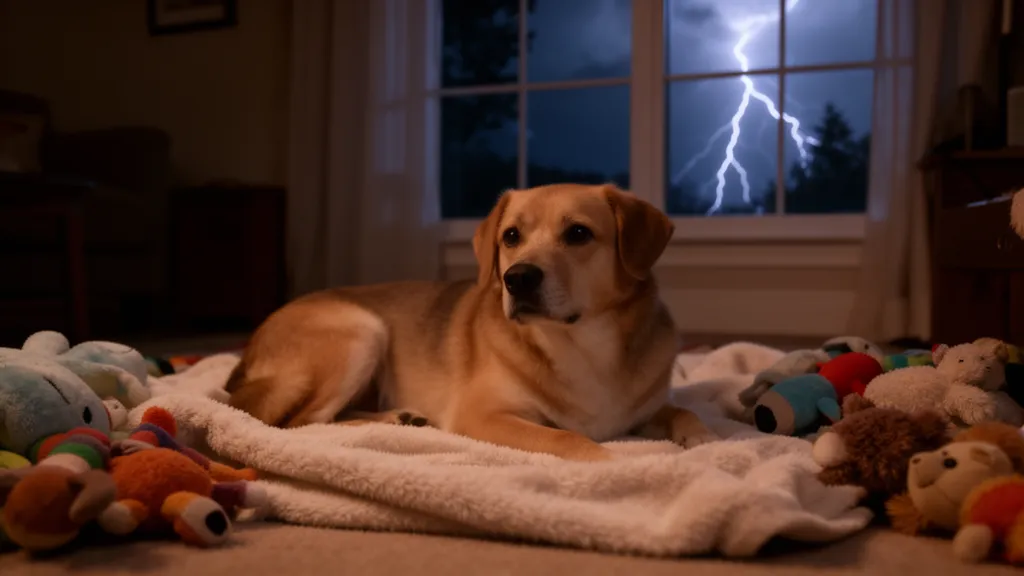
The tempestuous roar of thunder may well evoke a visceral dread within the heart of a human. Dogs, equipped with a sensory perception far more acute than our own, experience the ferocity of storms in staggering, often overwhelming, detail. Their keen auditory capabilities allow them to detect the low rumble of distant thunder long before it reaches our human ears, setting into motion a cascade of primal responses rooted in their evolutionary past. The evolutionary lineage of canines links back to wolves, whose ancestors weathered the tumultuous skies and sought refuge against nature’s wrath—a connection that reverberates through the contemporary domestic dog’s psyche.
Delving into the neurobiology of canine anxiety during thunderstorms reveals a complex interplay of hormones and neurotransmitters. For many dogs, the mere prelude of an approaching storm ignites a flood of adrenaline, activating the sympathetic nervous system and triggering a fight-or-flight response. This instinct, while an essential survival mechanism, is often ill-suited for domesticated animals in safe environments where escape is not an option. Such moments amplify emotional distress and manifest in behaviors as varied as frantic pacing, frantic barking, or an alarming desire to escape—a classic illustration of the anxieties that burgeon when an innate survival instinct clashes with the inability to act upon it.
The attachment theory contextualizes this phenomenon, revealing how the emotional bonds between dogs and their human companions impact their responses to fear-inducing stimuli. A dog’s perception of safety is heavily reliant on the availability and responsiveness of its human caregiver. During storms, a sense of uncertainty can shatter the dog’s feeling of security; this disarray invites an exploration of their behavioral responses, often precipitating a deep-seated need for reassurance from their human counterpart. Just as a child may seek comfort in the presence of a parent during a thunderstorm, so too does a dog. It’s within this emotional framework that proper understanding and handling of a dog’s anxiety plays a transformative role.
Behavioral ethology grants further insights into how dogs communicate their stress during storms, often through subtle body language cues that can be easily overlooked by an untrained observer. Signs of anxiety may manifest as a lowered body posture, pinned ears, or a tail tucked tightly between the hind legs—each a near-silent testament to their internal turmoil. Recognizing these nuances is paramount for effective intervention. A dog’s early indicators of stress are not mere inconveniences but cries for help that demand immediate attention and thoughtful response. Canines often exhibit more pronounced behaviors once anxiety reaches a threshold, marking the transition from a general unease to a full-blown panic state.

Greenies Pill Pockets Large Size Dog Treats, Peanut Butter, 15.8 oz | Vet-recommended, masks pill smell & taste, moldable texture, capsule size, natural ingredients, no fillers, 15.8 oz. pouch
(as of October 25, 2026 12:19 GMT +00:00 - More infoProduct prices and availability are accurate as of the date/time indicated and are subject to change. Any price and availability information displayed on [relevant Amazon Site(s), as applicable] at the time of purchase will apply to the purchase of this product.)In recognizing these psychological landscapes, pet owners are better equipped to craft tailored interventions. The act of observing and heeding a dog’s unique emotional spectrum is an ongoing conversation, a dynamic relationship in which the human must become both an astute listener and an instinctive guide. Through fostering a compassionate understanding of thunderstorm anxiety, caregivers can not only alleviate their dog’s immediate distress but also strengthen the profound bond that intertwines human and canine experiences—a symbiotic connection that enriches both lives, especially amid the most tumultuous storms.
In the garden of training techniques, the discerning pet owner will find not merely a collection of methods but a richly woven tapestry of understanding, adaptation, and empathetic communication. At the core of effective training lies the principles of operant conditioning, a foundation meticulously laid by the pioneering behaviorists of the 20th century. This approach mandates a nuanced understanding of reinforcement and its pivotal role in modifying canine behavior, particularly in moments of acute anxiety such as those provoked by thunderstorms.
Central to operant conditioning is the distinction between positive reinforcement and negative reinforcement. With the former, desirable behaviors are met with rewards—be it treats, praise, or the simple companionship of their human. This method underscores the emotional landscape of canine learning; the reinforcement must align with the dog’s values and predilections, ensuring that the responses elicited are meaningful. A timid dog, for instance, may respond more fervently to soothing vocal affirmations than to tangible rewards, a reminder that the psychological underpinnings of each dog’s preferences are as varied as the breeds themselves. Striking this balance fosters an environment ripe for growth and blossoms into behaviors that can mitigate anxiety.
Moreover, the idea of desensitization plays an instrumental role in training, especially when addressing storm-related fears. This process involves the gradual exposure of the dog to the stimuli associated with thunder in a safe setting, counterbalanced with positive experiences. Commencing with low levels of sound—perhaps simulating thunder through recordings at a minimal volume—allows the dog to navigate the stress inducing phenomenon while receiving rewards for calmness. As the sessions progress, the sound can be gently increased, reinforcing the association of thunder with positive experiences rather than fear. This delicate interplay, while requiring consistency and patience, can lead to significant shifts in the dog’s emotional response over time.
Simultaneously, understanding the critical role of the emotional threshold is essential. Each dog possesses a unique threshold for stress and anxiety, often influenced by early life experiences and breed characteristics. Monitoring responses during training sessions provides invaluable insights into the evolving capacities of the dog to process fear stimuli. Here, the human becomes the astute observer, adjusting the intensity of exposure and the nature of rewards aptly to comply with the dog’s individual needs. This keen awareness fosters an intrinsic trust, creating a safe space where learning can flourish amidst uncertainty.
Behavioral case studies illuminate the efficacy of these training techniques. Consider the journey of a collie, initially frozen in terror at the first clap of thunder. Through a structured regimen of positive reinforcement paired with desensitization, coupled with the judicious application of calming signals and the gradual introduction of thunder sounds at low volumes, this dog transformed from a quaking shadow into a resilient companion who could navigate summer storms with newfound composure. Such narratives are not mere anecdotes; they embody the potential of systematic behavioral protocols when undertaken with a compassionate understanding of the canine experience.
In connection with these training approaches, establishing a communication framework embedded in body language signals becomes paramount. The art of training transcends verbal commands; it resides in the ability to attune to the subtleties of canine communications. A shift in posture, a flick of the tail, or a soft whimper can offer critical insights into a dog’s emotional state. As such, successful training not only directs behavior but harmonizes the electric symphony of human and canine communication, nurturing an environment where both parties feel acknowledged and valued.
To create an environment that soothes the tormented spirit of a dog amidst the chaos of an impending storm involves a thoughtful synergy between architecture and emotional psychology. The foundational principle is to construct a tangible sense of safety and predictability in the dog’s environment, a fortress against the tumult that nature insists upon. Within our homes, the elements of sanctuary can be meticulously woven to mitigate the psychological impacts of storm anxiety—an act of architectural kindness towards our four-legged companions.
A quiet, insulated space, ideally devoid of windows, becomes an oasis where thunder’s malevolent growl cannot intrude. A dedicated area filled with familiar scents—be it a treasured blanket or a favorite toy—can provide an anchor, a tactile reassurance that there is indeed stability in an otherwise tempestuous world. The olfactory senses of dogs are intricately linked to memory and emotion; thus, creating a haven imbued with their essence can summon a sense of security that transcends mere physical attributes.

Darkness plays a dual role in this narrative; it’s both a physical barrier against the flashes of lightning and a psychological cloak for the vulnerable. Covering windows with heavy drapes or creating makeshift barriers can diminish the disorienting illuminations that daunt a skittish dog, while also fostering an environment conducive to rest and relaxation. The very act of dimming the harsh truths of chaotic atmospherics, much like drawing the curtains on a stage in anticipation of a performance, can evoke a tranquil calmness that nurtures the fraught psyche.
Furthermore, the inclusion of soft, calming sounds can transform the cacophony of a storm into a harmonious background symphony of tranquility. The gentle hum of a white noise machine, or carefully curated playlists of classical or ambient music, can veil the poignant spikes of thunder, gently morphing the auditory landscape from one of fear to one of placation. Such measures resonate profoundly with the emotional compass of a dog, emphasizing the role of auditory stimuli in shaping their emotional experiences.
This sanctuary must also be fluid in its adaptability—an environment that’s responsive to the dog’s needs throughout the storm. Providing calming physical touch through gentle petting or soothing strokes during moments of heightened anxiety can elevate the dog’s heart rate and reduce cortisol levels. The intricate dance of empathetic connection here reminds us that touch conveys messages of security far deeper than any spoken word. In this intimate communion, the owner not only serves as a refuge but also as a sentient guide whose presence evokes profound reassurance.
An additional layer of enrichment, woven into this architectural design, is the provision of engaging distractions to draw attention away from the storm’s assault. Interactive toys that dispense treats, puzzle feeders, or soft chew items can create a cognitive diversion—an enticement into play that pulls the mind from distressing stimuli into an exploration of enjoyment. The essence of this diversion resonates with the principles of behavioral ethology; redirecting focus is profoundly effective in alleviating anxiety’s insidious grip.
In culmination, the physical environment itself must be regarded not merely as a backdrop to exist in but as a participant in the dialogue between anxiety and healing. By enveloping the dog in a meticulously crafted sanctuary of sensory reassurance—where darkness and sound harmonize, grounded in familiarity and nurtured by touch—owners engage in an eloquent orchestration of serenity that echoes through the heart of their canine companions. This sacred space serves as both shield and balm, transcending the inevitable thunderous roars with the quiet promise of steadfast love and unwavering presence.
In an increasingly complex landscape of canine anxiety management, the thoughtful application of calming aids and medications emerges as a vital adjunct to behavioral interventions and environmental adaptations. While a well-structured environment and behavioral training lay the groundwork for emotional stability, it is through the strategic use of calming aids that pet owners can find additional pathways to ease their dogs’ distress during those daunting moments of thunder and lightning.
The market offers a diverse array of calming products, ranging from natural herbal remedies to scientifically formulated pheromones. For instance, the use of pheromone diffusers mimics the natural calming scents produced by lactating mother dogs, instilling a sense of security and comfort. This synthetic replication of familiar scents taps into the dog’s olfactory memory, acting as a potent anxiolytic agent that subtly reframes the emotional response to anxiety-inducing stimuli. These products can be seamlessly integrated into the home environment, wafting reassurance into the air and creating a tranquil backdrop amidst stormy upheaval.
Moreover, natural supplements—such as those containing L-theanine or chamomile—serve as adjuncts in the arsenal against canine anxiety. Working on the biochemical level, these compounds can foster relaxation without the sedative effects often associated with conventional medications. A thorough consultation with a veterinarian is paramount to tailor these supplements to the individual needs and health profiles of dogs, ensuring compatibility and efficacy. The careful orchestration of such aids not only respects the unique biochemistry of each dog but also aligns with a holistic understanding of their emotional landscape.
As we venture into the realm of pharmacological interventions, a more nuanced appreciation of the veterinary landscape becomes essential. Selective serotonin reuptake inhibitors (SSRIs) and benzodiazepines may be prescribed for dogs whose anxiety thresholds are markedly lower or for those who exhibit severe panic behaviors. These medications alleviate the psychological burden by modulating neurotransmitter activity within the brain, effectively recalibrating the emotional responses to fear stimuli. However, it’s critical that such medications be regarded as part of a broader therapeutic strategy, ideally prescribed in conjunction with behavioral modification and environmental management to enable a comprehensive approach to treatment.
In the journey of understanding, one must also consider dosage and timing—two critical components that can dictate the success of calming aids and medications in alleviating anxiety. Tailoring the administration of such aids to the onset of an impending storm increases the likelihood of an effective response. For instance, beginning the use of a pheromone diffuser or a calming supplement a few days prior to a forecasted storm allows adequate time for the dog to experience the cumulative effects, thus enhancing the potential for the canine to navigate the crisis with greater ease.
It is equally important to recognize that the use of calming aids is not a panacea; rather, they represent a facet of a multi-dimensional approach to managing canine anxiety. The efficacy of these aids can be greatly magnified when interwoven with behavioral techniques such as desensitization and counter-conditioning. The introduction of a calming aid during a controlled desensitization session can create a more meaningful association with the previously feared stimuli, transforming a reminder of fear into one of solace. The interplay between chemical aid and behavioral strategies fosters a comprehensive narrative of recovery, whereby the dog learns not only to cope with fear but to thrive in its presence.
Case studies illuminate the transformative power of these strategies. A Beagle, previously paralyzed by fear during thunderstorms, became a beacon of resilience following the integration of a combination of calming pheromones and structured behavioral training. By initiating a regime that incorporated these calming aids, the owner was able to witness firsthand the evolution of the dog’s response; from trembling and hiding to seeking comfort in familiar spaces. This success underscores the need for compassion and flexibility in approach, recognizing that each canine companion may exhibit unique responses to different modalities of care.
Ultimately, the journey towards calming a storm-phobic dog is as intricate as the emotional tapestry that weaves together the relationship between human and canine. Calming aids and medications can serve as essential tools in this endeavor, priming the way not just for immediate relief, but for sustainable behavioral growth that reverberates through the very core of the human-animal bond. With deftness and empathy, pet owners can harness these resources, crafting a holistic approach that not only addresses the symptoms of anxiety but fosters a profound sense of security and resilience that resonates deeply withinour beloved companions.
Related Posts

Canine Cognitive Dysfunction – Navigating Cognitive Decline in Dogs

How to Transition Your Dog to a New Diet Safely