Homemade Dog Food – Recipes for a Healthier Pup
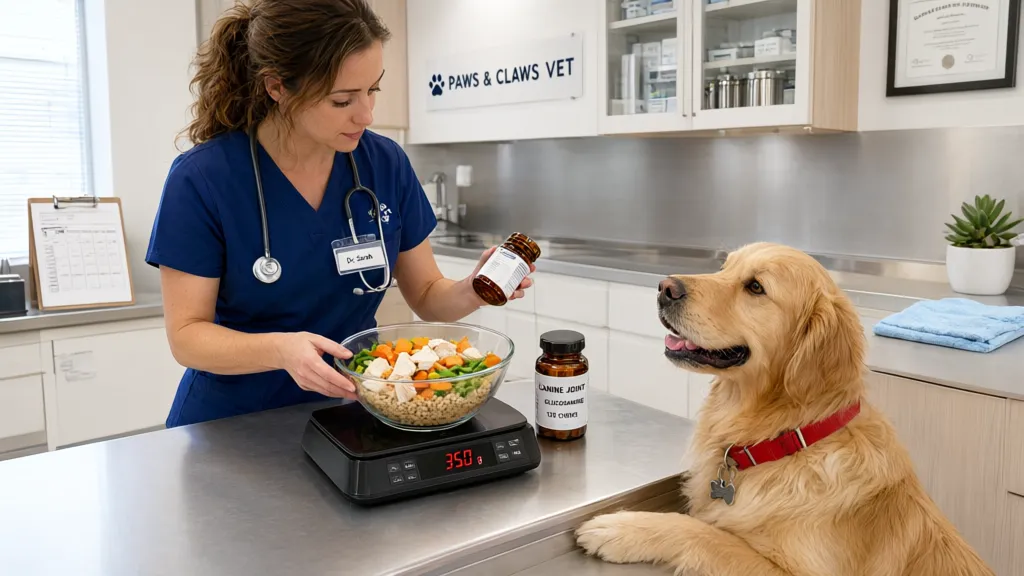
Homemade food is nutritionally adequate only when the complete recipe—including its prescribed supplement—is formulated to meet the dog’s life-stage requirements. Meat, grains, and vegetables alone commonly provide too little calcium, iodine, zinc, copper, vitamin D, vitamin E, and essential fatty acids; adding a multivitamin or eggshell powder by guesswork does not reliably correct the imbalances.
Have the recipe formulated for the individual dog by a board-certified veterinary nutritionist, particularly for puppies, pregnant or nursing dogs, and dogs with chronic disease. Growth diets require carefully controlled calcium and phosphorus; excess calcium can disrupt skeletal development, especially in large- and giant-breed puppies. A recipe designed for an adult dog may therefore be unsafe for a growing dog even if its ingredients appear wholesome.
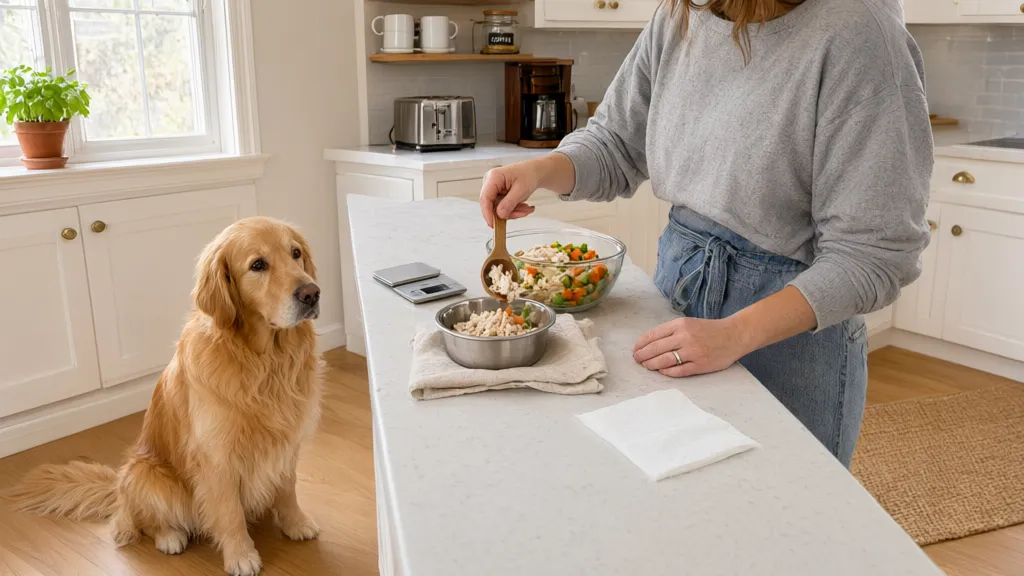
Energy needs depend on body weight, age, neuter status, activity, body condition, and health. Weigh portions rather than relying on cups, and track weight and body-condition score; adjust calories with veterinary guidance while keeping the recipe’s nutrient-to-calorie balance intact. If calories are reduced by simply feeding less of a complete recipe, essential nutrients may fall below requirements. Treats and unbalanced extras should generally provide no more than 10% of daily calories.
Protein supplies essential amino acids for tissue maintenance, while dietary fat provides energy and essential fatty acids. Carbohydrate is not required in a specific form, but cooked grains or other digestible sources can contribute energy and fiber. Fiber affects stool quality and gut fermentation; too much can dilute calories and reduce mineral availability. Dogs with pancreatitis, kidney disease, food-responsive enteropathy, or other medical conditions may need targeted nutrient changes, not a generic “bland” or low-fat homemade diet.
Milk-Bone MaroSnacks Small Dog Treats with Real Bone Marrow, 40 Oz. | Dog treats with 12% protein
(as of October 31, 2026 18:45 GMT +00:00 - More infoProduct prices and availability are accurate as of the date/time indicated and are subject to change. Any price and availability information displayed on [relevant Amazon Site(s), as applicable] at the time of purchase will apply to the purchase of this product.)Cooking changes food moisture and nutrient availability, so the formulation must specify ingredients by weight, preparation method, cooking yield, and supplement amounts. Use the stated cuts and ingredient quantities; substitutions can alter fat, calories, minerals, or amino acids. Store portions promptly under refrigeration or freeze them, and discard food left at room temperature for extended periods.
Monitor body weight, appetite, stool consistency, skin and coat, and activity after a diet change. Persistent diarrhea, vomiting, itching, lethargy, unplanned weight change, or poor growth warrants veterinary assessment; these signs can reflect disease or dietary imbalance and should not be managed by repeatedly changing ingredients.
These recipes are meal toppers, not nutritionally complete diets. For a full-time homemade diet, use a veterinary nutritionist’s formulation and its specified supplement; adding either recipe as a staple can unbalance the diet.
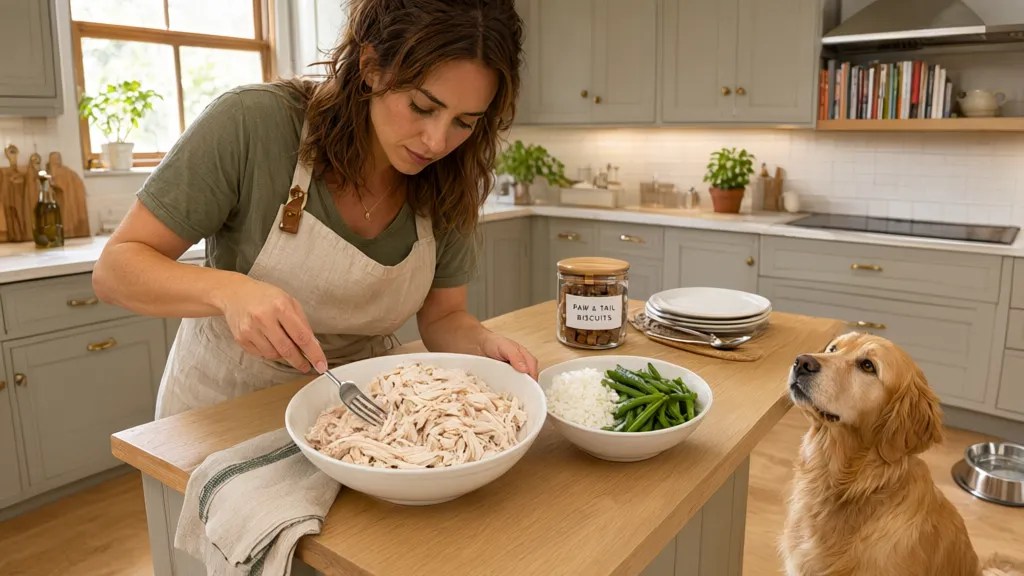
Chicken, rice, and green beans: Simmer 450 g (1 lb) boneless, skinless chicken breast in water until the thickest part reaches 74°C (165°F). Cook 1 cup of white rice separately and steam ½ cup of chopped green beans until soft. Shred the chicken, combine the ingredients, and add a little cooking water if needed for moisture. Do not add salt, stock cubes, onion, garlic, or seasoning blends; many prepared broths contain ingredients unsuitable for dogs.
Lean beef and pumpkin: Brown 450 g (1 lb) lean ground beef in a pan, breaking it into small pieces; drain excess fat. Cook ½ cup plain rolled oats in water until soft, then mix with the beef and ½ cup plain cooked pumpkin. Use pumpkin puree without added sugar or spices, not pumpkin-pie filling. This mixture is richer than the chicken option, so it may be unsuitable for dogs whose veterinarian has prescribed fat restriction.
Serve either recipe plain and cooled, mixed into the dog’s usual complete food in a quantity that does not displace a meaningful share of its daily nutrients. Introduce a new ingredient gradually and stop feeding it if vomiting, diarrhea, or itching develops. Dogs with food allergies, pancreatitis, kidney disease, or prescribed diets need veterinary guidance before receiving a topper.
Refrigerate promptly in shallow containers and use within three to four days, or freeze individual portions. Thaw in the refrigerator, not on the counter, and discard leftovers that have been left at room temperature for more than two hours. Remove bones and check cooked meat carefully for fragments before serving.
Related Posts
The Benefits of Homemade Dog Treats

Dealing with Canine Chasing Behavior – Safety Measures