Pet-Proofing Your Home – Preventing Accidents and Mishaps
A truly safe home for dogs is built around controlling access, not relying on the dog’s judgment. Canines explore with the mouth, nose, and forelimbs, so hazards must be removed at the level of reach, scent, and opportunity. Puppies, adolescent dogs, and high-arousal breeds with strong retrieval, chewing, or predatory motor patterns are at greatest risk because curiosity, teething, and impulsive investigation override inhibition. Breed history matters: retrievers often mouth novel objects, terriers excavate and shred, herding dogs scan and chase moving items, and scent hounds track odor trails directly to concealed dangers such as medications, food wrappers, or chemical containers.
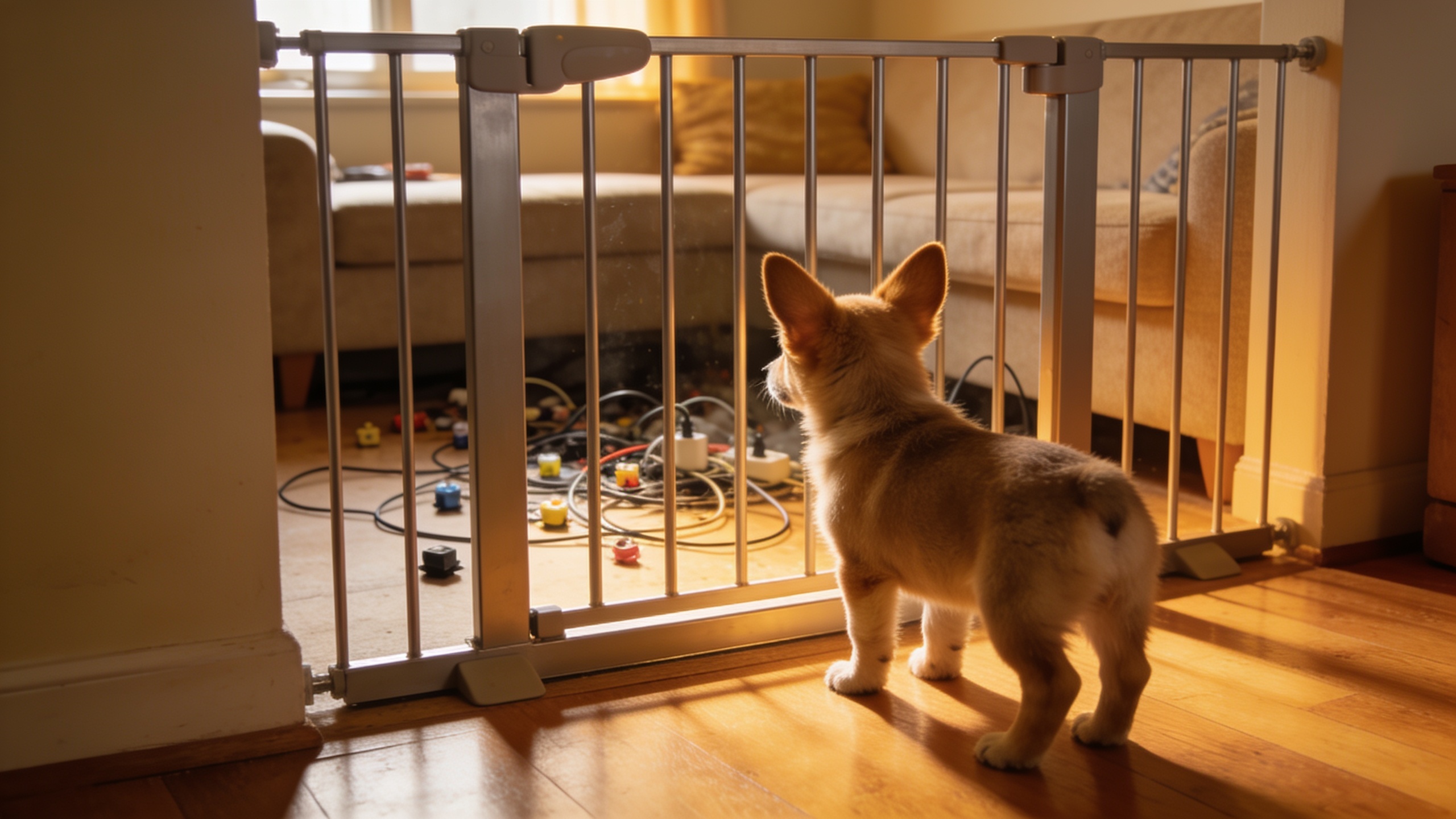
Use physical barriers first. Baby gates, closed doors, crate confinement, and tethered supervision prevent rehearsing dangerous behavior, which is how pets learn to counter-surf, raid trash, or chew cords. Every rehearsal strengthens the habit through reinforcement, even if the dog only finds a dropped crumb or a chewed sock. Electrical cords should be elevated, enclosed, or run through rigid covers because puppies and young dogs commonly target movement, texture, and chew resistance. Cords at floor level are especially hazardous for brachycephalic or toy breeds, which may receive burns or airway trauma from a single bite.
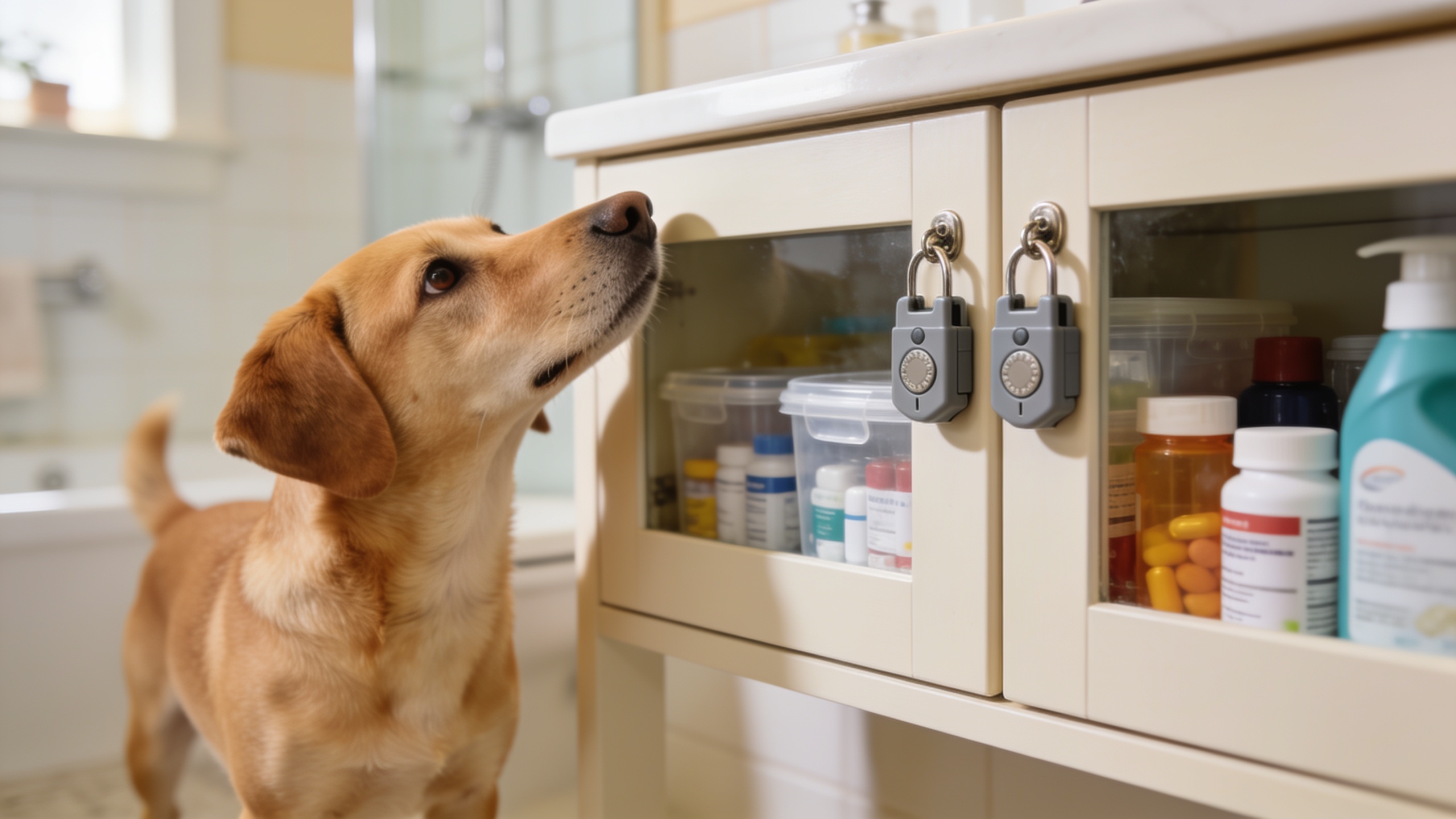
Floor-level clutter is a behavioral trap. Small objects, hair ties, children’s toys, sewing supplies, and prescription bottles become swallowable reinforcers. Dogs that gulp rather than chew, including many Labradors, Beagles, and adolescent mixed breeds, are at elevated risk of foreign-body obstruction. Anything smaller than the dog’s esophageal diameter should be treated as ingestible. Store medications, nicotine products, cannabis edibles, xylitol-containing gum, essential oils, and veterinary preventives in latched cabinets; many toxic exposures occur because dogs are highly motivated by smell and can open lightweight containers, bags, or purses.
Environmental design should reduce stress as well as exposure. A dog that can see, hear, or smell repeated triggers at windows, doors, or fences can develop barrier frustration, noise reactivity, or escape behavior. Use frosted film, baby gates, or strategic furniture placement to prevent uncontrolled access to front doors and street-facing windows. For anxious dogs, a predictable resting area away from traffic, children, and food preparation reduces arousal and lowers the chance of destructive or self-harming behavior.
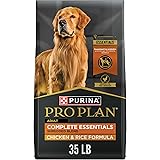
Purina Pro Plan Complete Essentials Chicken & Rice Dry Dog Food, 35 lb Bag | Shredded Blend crunchy kibble with tender pieces, real chicken as the first ingredient, live probiotics for digestive health
$74.48 (as of October 14, 2026 10:23 GMT +00:00 - More infoProduct prices and availability are accurate as of the date/time indicated and are subject to change. Any price and availability information displayed on [relevant Amazon Site(s), as applicable] at the time of purchase will apply to the purchase of this product.)Kitchen safety requires special attention because the dog is being trained by your routines. Dropped food, accessible pans, hot surfaces, and reachable counters create powerful reinforcement schedules that are hard to erase. Secure trash with a lid that resists nosing or pawing, and keep compost, bones, foil, skewers, and cooked fat trimmings inaccessible. Dogs with gastrointestinal sensitivity or pancreatitis risk are more vulnerable to dietary scavenging because fatty leftovers can trigger vomiting, abdominal pain, or acute disease after a single exposure.
Outdoor safety should match the dog’s physical ability and escape tendencies. Double-gating, 6-foot fencing for athletic jumpers, buried barriers for diggers, and supervised yard time are essential for breeds selected for speed, prey drive, or independence. Check gates, latches, and fence lines daily; many escape injuries happen through small failures that a determined dog finds immediately. Nighttime visibility, ID tags, microchip registration, and current contact data are part of the environment because prevention includes recovery when containment fails.
High-risk signs that the environment is still unsafe include:
- Repeated counter-surfing, trash raiding, or object theft
- Chewing specific items during unsupervised periods
- Escalating door-darting, fence pacing, or window barking
- Eating nonfood items, especially fabric, rubber, corn cobs, or string
- Vomiting after access to kitchen, bathroom, or yard areas
Where possible, manage the dog before the problem happens: preempt access to tempting zones, rotate safe chew items, confine during household chaos, and interrupt unsafe patterns early enough that the dog never gets reinforced by the target behavior. A safe environment is one that makes the wrong choice unavailable and the right choice easy to repeat.
Common household hazards become emergencies because dogs do not evaluate risk the way humans do; they follow immediate reward, odor, motion, and oral comfort. The highest-yield prevention strategy is to identify what the dog is most likely to seek under stress, boredom, teething, hunger, or opportunistic scavenging, then remove the item before the dog can practice the behavior. For most dogs, the danger is not one spectacular event but repeated low-level access to toxic, obstructive, sharp, hot, or entangling objects that gradually increase the probability of injury.
Medications are a top intoxication source because many tablets taste benign or sweetened, and dogs have a highly developed ability to detect residues in purses, pill organizers, and bedside tables. Human pain relievers, antidepressants, stimulants, cardiac drugs, and sleep aids can cause neurologic signs, cardiovascular collapse, tremors, or gastrointestinal bleeding, often after a small ingestion in toy breeds or puppies. Even veterinary products become hazards when dosing errors occur; flea and tick preventives intended for a larger dog can cause neurologic toxicity in smaller animals, and feline formulations are not interchangeable with canine use.
Food hazards should be judged by metabolic impact, not by whether the item seems “just a snack.” Xylitol triggers rapid insulin release and hypoglycemia; grapes, raisins, and currants can cause acute kidney injury in susceptible dogs; cooked bones splinter into sharp fragments that may perforate the esophagus or intestine; yeast dough expands in the stomach and can produce distention plus ethanol exposure. Fat trimmings, gravies, bacon grease, and rich table scraps are especially risky in breeds predisposed to pancreatitis or in dogs with prior gastrointestinal sensitivity, because one exposure may precipitate vomiting, abdominal pain, dehydration, and lethargy within hours.
Many household objects become dangerous because dogs ingest them under arousal or separation-related distress. Socks, underwear, dishcloths, toy stuffing, hair ties, and rope toys can create linear foreign bodies, especially in young dogs that shred and swallow during play. Cats’ toys, children’s craft materials, and packing foam are problematic because they are sized for easy swallowing and often moved by scent or movement. If a dog routinely targets soft fabric, do not assume “outgrowing” the habit; instead, restrict access and provide chew items with appropriate diameter, compressibility, and durability for the dog’s jaw strength and chewing style.
Bathroom and laundry areas are overlooked toxin zones. Toothpaste with xylitol, razors, dental floss, contact lens solution, cleaning agents, and sanitary products can cause poisoning or intestinal obstruction. Floss is particularly hazardous because it acts like a linear thread once swallowed. Trash cans in these rooms often contain tissues, swabs, wrappers, and medication packaging that smell of human food or body fluids, which makes them highly reinforcing to scavengers and scent hounds.
Watch for early indicators of ingestion or toxic exposure:
- Sudden drooling, lip licking, or repeated swallowing
- Restlessness, trembling, ataxia, dilated pupils, or unusual vocalization
- Vomiting, retching, abdominal discomfort, or refusal to eat
- Collapse, weakness, pacing, or disorientation
- Bloody stool, black stool, or abdominal bloating
Preventive management works best when it matches the dog’s behavioral profile. Food-driven dogs need sealed storage and zero reinforcement from counters or dropped crumbs. Novelty-seeking adolescents need tighter supervision during teething and social maturation. Fearful dogs need reduced access to panic-triggering exits, windows, and escape routes because they’re more likely to bolt into traffic or chew through barriers. Working dogs and high-drive breeds often require structured outlets for oral and chasing behaviors; if those needs are ignored, they will self-select destructive targets that are easier to reach than the items you intended.
Use the same standard for outdoor hazards. Antifreeze, rodenticides, snail baits, compost, mushrooms, fertilizers, and stagnant water can all be dangerous after brief access. Dogs that carry objects, dig, or track scent are more likely to ingest contaminated debris, so yards should be inspected after storms, gardening, pest control, or neighbor activity. The safest home is one in which every tempting or toxic object is either physically unreachable, latched behind a barrier, or absent from the dog’s environment entirely.
Related Posts

Bonding Activities – Strengthening Your Connection with Your Dog
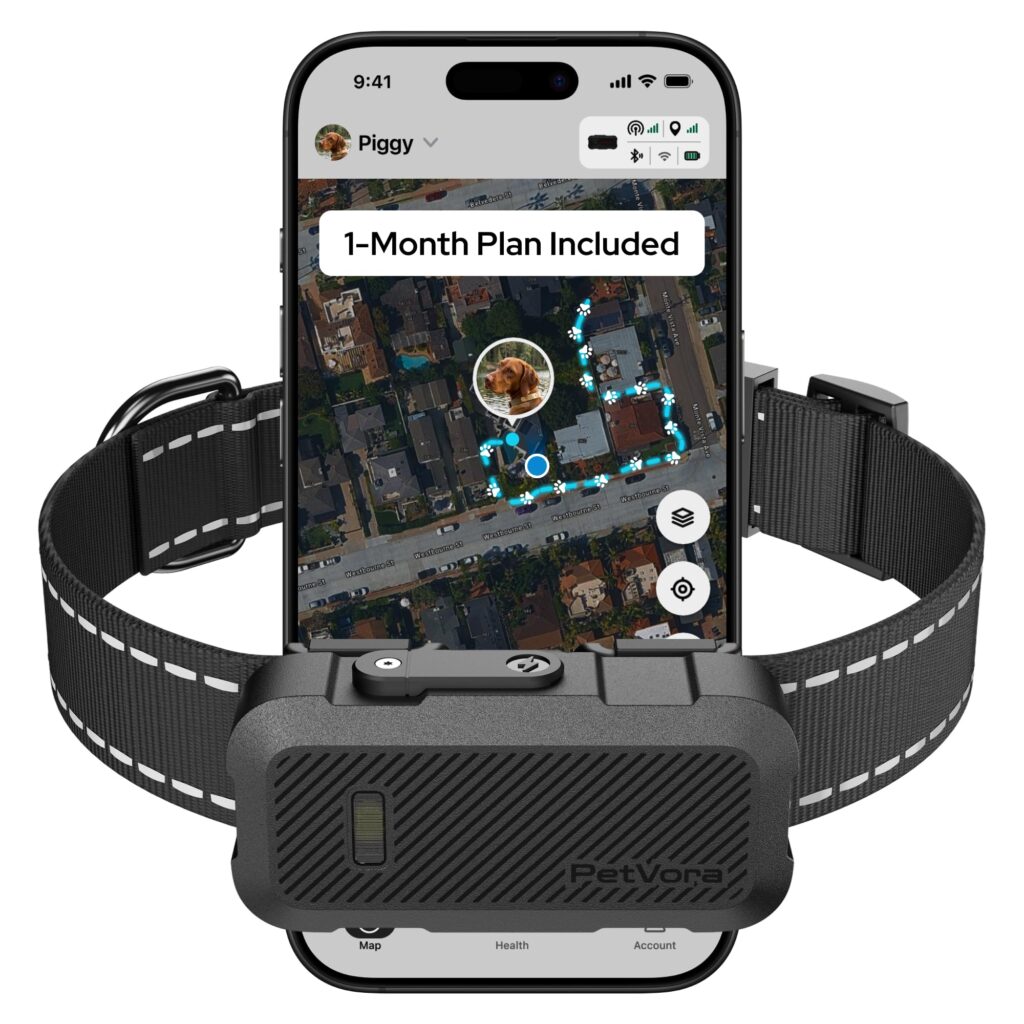
PetVora Smart Collar