Creating a Safe and Healthy Home Environment for Your Dog
Effective dog-proofing starts with understanding canine foraging, chewing, climbing, and investigative behavior, which are amplified by breed history, age, and arousal state. Retrievers, scent hounds, terriers, herding breeds, and adolescent dogs are disproportionately likely to mouth, disassemble, or ingest novel objects because selective breeding favored persistence, olfactory tracking, prey drive, or problem-solving under stimulation. Puppies explore orally because their sensory and reward systems are still immature; senior dogs may become hazard-prone through cognitive decline, visual loss, or reduced inhibitory control. Any object within nose, jaw, or paw reach should be treated as accessible if the dog can obtain it in under a few seconds.
Target the highest-risk ingestion items first: medications, nicotine products, cannabis, xylitol-containing gum and baked goods, grapes and raisins, onions, garlic, chocolate, sugar-free candies, rodenticides, antifreeze, fertilizer, batteries, magnets, sewing needles, dental floss, and stringy textiles. Dogs often chew packaging before contents are recognized, so child-resistant closures are not sufficient if containers are left on counters, purses, backpacks, or bedside tables. Many toxic exposures occur through “crumb” access, not theft of a full serving, because small quantities of xylitol, rodenticide, or concentrated THC can produce severe neurologic, hepatic, or hypoglycemic effects.
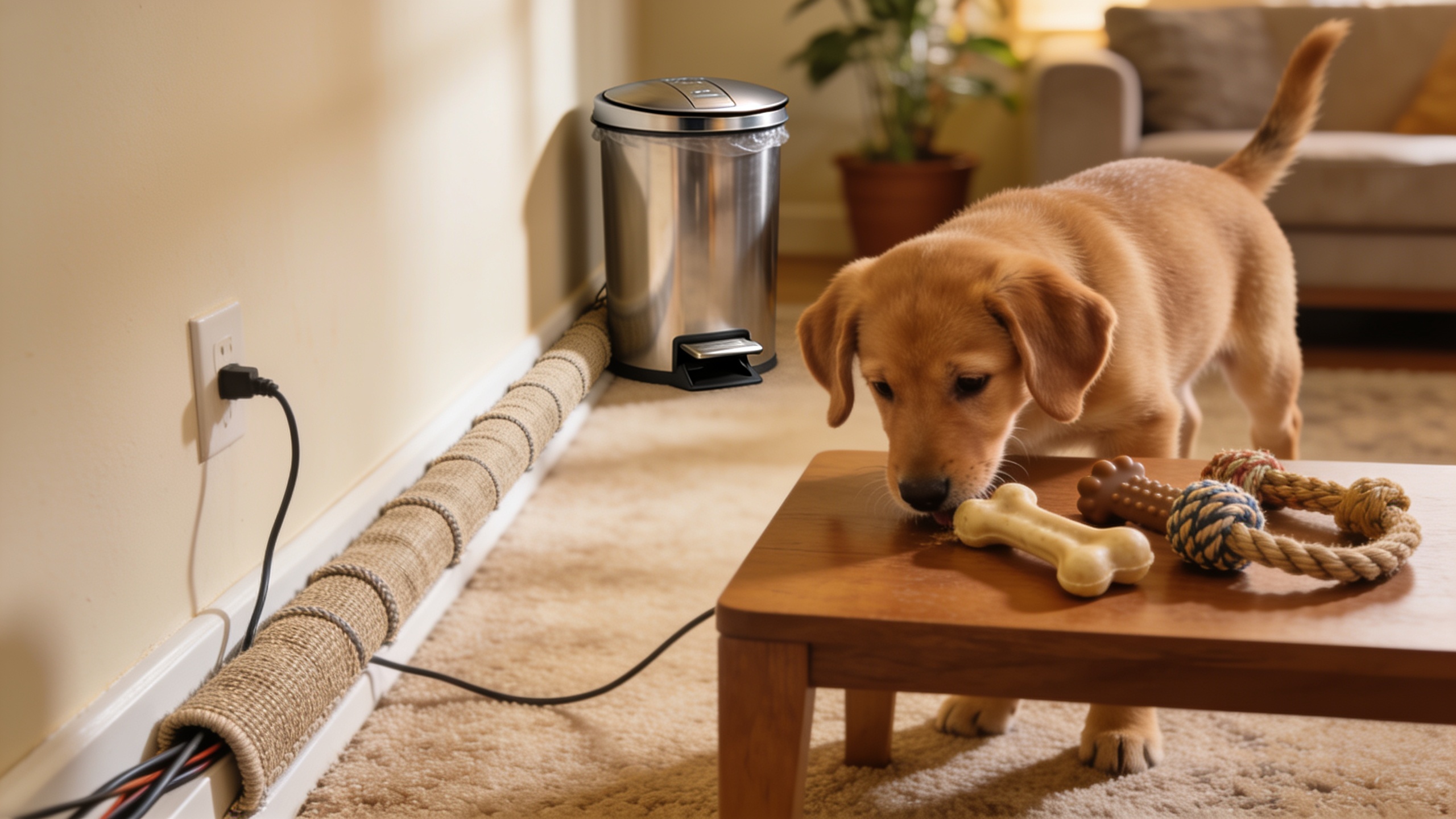
Electrical cords should be treated as both electrocution and entanglement hazards. Young dogs, brachycephalic breeds with short muzzles, and dogs with high oral fixation often gnaw when cords are stationary and within mouth height; chewing can cause oral burns, pulmonary edema after shock, or mechanical strangulation if cords wrap a limb or neck. Use cord covers, reroute cables behind furniture, and eliminate dangling phone chargers, blind cords, and appliance leads. Curtains, tablecloths, and low-hanging decorations create snag points that can topple heavy objects or trap collars, especially for dogs who jump vertically or spin when excited.
Houseplants require species-level screening because many common ornamentals contain insoluble calcium oxalates, cardiac glycosides, or neurotoxic compounds. Remove or isolate lilies, sago palm, dieffenbachia, pothos, philodendron, oleander, and tulip bulbs; dogs typically ingest these after chewing stems or digging up soil. Trash systems should be lidded and weighted, since food residue, bones, skewers, coffee grounds, and sanitary products can trigger gastroenteritis, obstruction, or pancreatitis. Cabinets containing cleaning agents, pesticides, essential oils, and alcohol should be latched; many dogs are attracted to bleach, phenols, and fragranced products because volatile compounds are olfactory salient.
Purina Pro Plan Complete Essentials Chicken & Rice Dry Dog Food, 35 lb Bag | Shredded Blend crunchy kibble with tender pieces, real chicken as the first ingredient, live probiotics for digestive health
$74.48 (as of October 3, 2026 09:10 GMT +00:00 - More infoProduct prices and availability are accurate as of the date/time indicated and are subject to change. Any price and availability information displayed on [relevant Amazon Site(s), as applicable] at the time of purchase will apply to the purchase of this product.)Environmental design reduces reliance on constant supervision. Use baby gates to create graduated access, crate or pen training for unsupervised periods, and closed-door management for bathrooms, laundry rooms, and garages where detergents, sharp tools, and antifreeze are stored. Block access to stairs if the dog is neurologically immature, orthopedicly vulnerable, or visually impaired. If a dog targets socks, underwear, toys, or rocks, remove the reinforcement history by eliminating floor clutter and storing tempting items in sealed bins; repeated successful theft strengthens future scavenging through variable-ratio reinforcement.
Collars, harnesses, and identification tags can become entanglement hazards in multi-dog households, crates, and play areas. Breakaway options are safer for unsupervised indoor use, while flat collars left on around furniture can snag on drawer pulls or crate latches. Chew items must match jaw strength and oral style: soft chewers may manage fabric or rubber, whereas power chewers, particularly bully-type breeds and working lines, can fracture teeth on brittle nylon, antlers, hooves, and cooked bones. Durable does not mean safe if a product can splinter into sharp fragments or be swallowed whole.
Observable signs that the home environment is still unsafe include repeated counter-surfing attempts, fixation on exits or trash, rapid object theft, shredding at doors or baseboards, and persistent scanning behavior during human food handling. These are not “bad habits” in isolation; they indicate incomplete management, excessive environmental friction, or unmet species-typical needs for chewing, scavenging, and activity. A dog that can predict access to valuables will continue to practice the behavior, so prevention requires making rehearsal impossible, not merely punishing the outcome.

Health and safety management is most effective when it is built around the dog’s actual physiology rather than a generic “healthy dog” template. Body condition score should stay in the lean range, because excess adiposity increases inflammatory load, worsens osteoarthritis, impairs thermoregulation, and raises anesthetic risk. In practice, you should be able to palpate ribs with light pressure and see a visible waist from above; abdominal rounding, thickened neck fat, and fatigue on short walks usually indicate the dog is carrying metabolic risk before bloodwork changes become obvious.
Food matters for three separate reasons: nutrient adequacy, calorie control, and digestive tolerance. Large-breed puppies need correctly balanced calcium and phosphorus, not “extra calcium,” because oversupplementation disrupts endochondral ossification and can contribute to developmental orthopedic disease. Toy breeds are vulnerable to hypoglycemia if meals are skipped, while deep-chested dogs benefit from preventing rapid postprandial activity because gastric dilatation-volvulus risk is influenced by conformation, meal size, stress, and inherited gastric laxity. Dogs with pruritus, otitis, recurrent soft stool, or chronic licking may need ingredient elimination or a veterinary diet trial rather than arbitrary rotation of proteins, since uncontrolled diet changes confound diagnosis and can worsen gastrointestinal instability.
Parasite control should be treated as a year-round risk-management issue, not a seasonal courtesy. Heartworm prophylaxis prevents larval maturation and vascular damage long before cough or exercise intolerance appears; once adult worms occupy pulmonary arteries, treatment becomes slow, expensive, and dangerous. Flea and tick exposure can trigger more than itching: flea allergy dermatitis is driven by hypersensitivity to salivary antigens, and ticks can transmit hemoparasites, Lyme disease, Ehrlichia, and Anaplasma. Dogs that spend time in tall grass, wooded edge habitat, boarding facilities, or dog parks need tighter prevention than couch-potato dogs in apartments.
Dental disease is not cosmetic. Periodontal inflammation creates a chronic bacterial burden, pain during chewing, and a pathway for bacteria to enter the bloodstream. Bad breath, unilateral chewing, dropping kibble, chin rubbing, or sudden selectivity for soft food can indicate oral pain before owners notice visible tartar. Brachycephalic dogs, toy breeds, and dogs with crowded dentition develop calculus and gingival recession earlier, while working dogs may hide oral discomfort until performance declines. Home care should be selected for the dog’s mouth shape and tolerance; a brush that never touches the gingival margin is theater, not prophylaxis.
Exercise must be dosed according to orthopedic status, age, and arousal profile. Rapid repetitive impact can aggravate cruciate disease, elbow dysplasia, spondylosis, and lumbosacral pain, especially in large, fast-growing, or genetically predisposed breeds. Panting that does not resolve promptly, reluctance to jump, bunny-hopping, sitting during walks, or licking at joints are common early pain markers. Heat intolerance is more than “getting tired”: brachycephalic dogs, overweight dogs, dark-coated dogs, and dogs with airway or cardiac disease can decompensate quickly in warm, humid conditions because evaporative cooling becomes inefficient.
Schedule veterinary screening based on risk, not habit. Senior dogs need periodic blood pressure checks, renal and hepatic screening, thyroid assessment when indicated, and cognitive monitoring for sleep-wake disruption, house-soiling, confusion, or altered social interaction. Dogs on chronic medications require monitoring for drug interactions and organ toxicity; NSAIDs, anticonvulsants, and some behavioral medications need periodic laboratory oversight. Any persistent change in appetite, water intake, elimination, gait, respiration, skin, or temperament should be treated as data, not personality.
Warning signs that warrant prompt veterinary attention: repeated vomiting, abdominal distension, collapse, pale gums, sudden lethargy, persistent coughing, labored breathing, seizures, disorientation, refusal to bear weight, bloody diarrhea, abdominal pain, or an abrupt change in drinking or urination.
Behavior is also a health variable. A dog that cannot rest, startles easily, guards resources, or escalates quickly from arousal to barking, chewing, or repetitive movement may be living in a state of chronic stress that worsens immune function and lowers learning capacity. Management that reduces friction, increases predictability, and prevents repeated failure protects both welfare and household safety more reliably than escalation, intimidation, or inconsistent rules.
Related Posts

Waterproof AirTag Holder for Dog Collar
Puppy Pads with Pheromones