“MidWest Homes for Pets iCrate”
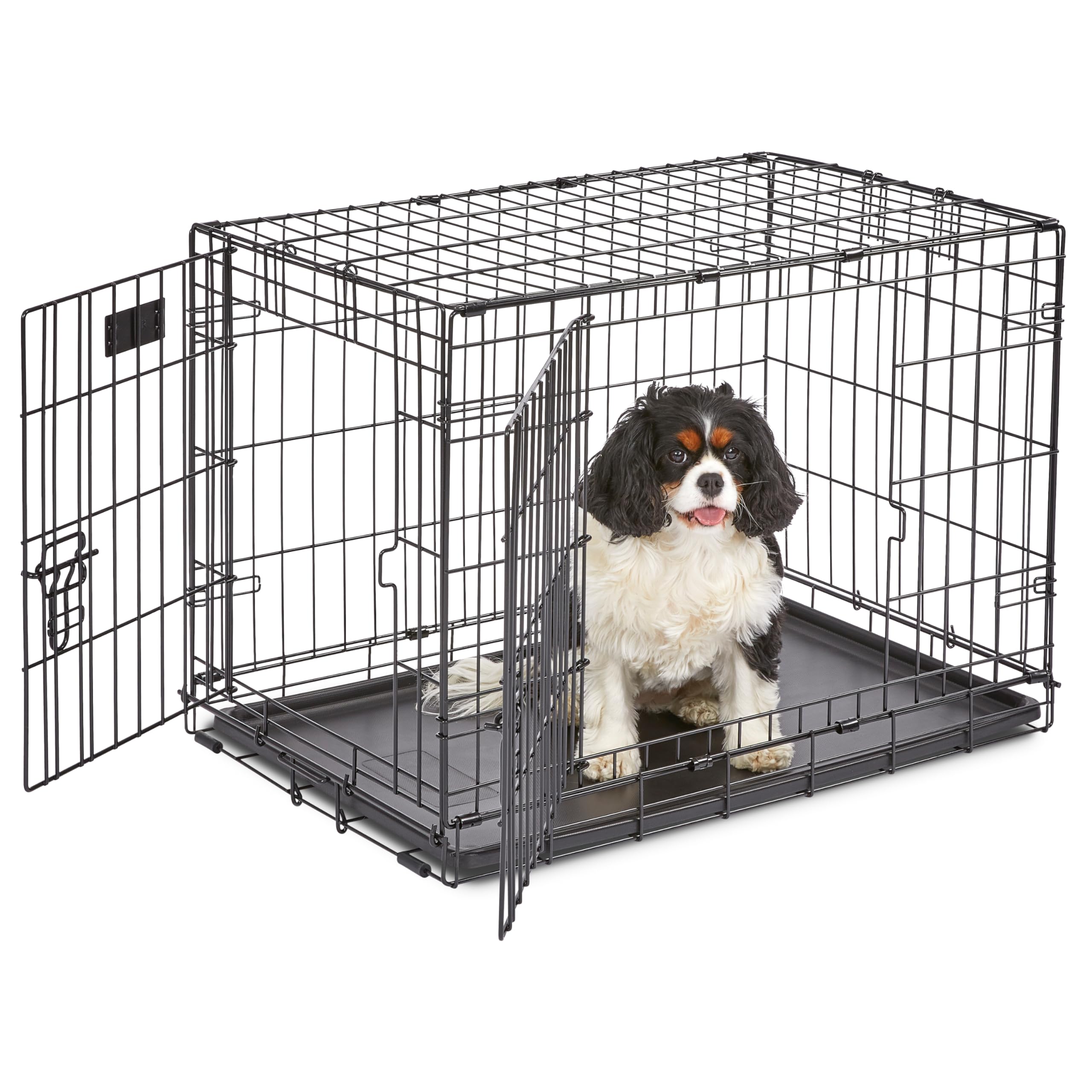
The Midwest 24-inch Single Door iCrate offers a practical den-like space for a small dog, with useful basics for home use and travel: a folding wire frame, divider panel, removable leak-resistant tray, rubber feet, and a slide-bolt latch with added locking features. Its listed size is 24.5 x 17.5 x 19.5 inches, and the maker suggests it for dogs weighing 12–20 pounds. Treat that weight range as a starting point, not a fit guarantee: your dog should be able to stand without crouching, turn around, and lie down comfortably. Dogs near the top of the range—or with long bodies or tall builds—may need the 30-inch model.
The divider is especially helpful for a growing puppy. Set it so there is enough room to stand, turn, and stretch out, but not so much extra space that a puppy can use one end as a toilet and the other as a bed. Adjust the panel as your dog grows. For an adult dog, remove it if the full crate gives them a comfortable fit.
A crate works best when it becomes a safe resting place, not a punishment or a way to leave a dog confined for too long. Introduce it gradually: leave the door open, toss treats inside, and let your dog explore at their own pace. Feed meals near or inside the crate if that helps create a positive association. Once your dog is relaxed, practice brief periods with the door closed and build up slowly. Never force a frightened dog inside.
- Check the fit: Measure your dog while standing and lying down. Choose a crate based on comfortable movement, not weight alone.
- Make it comfortable: Add bedding that fits securely and does not bunch against the door. If your dog chews or shreds bedding, supervise and choose a safer option.
- Inspect the hardware: Before each use, confirm that the frame is fully opened and locked, the tray is seated, and the slide bolts engage properly. Check for bent wires, sharp edges, loose parts, or signs of chewing.
- Use the tray sensibly: The removable pan can make routine cleanup easier, but check for spills and clean promptly. Keep the tray and crate dry to help maintain hygiene.
- Plan travel carefully: The folding design and carry handle make the crate easier to move, but the handle is for carrying the empty crate. In a vehicle, secure the crate so it cannot slide or tip; do not assume a wire crate is crash-tested protection.
The low threshold and broad opening may make entry easier for many small dogs, while the rubber feet help protect flooring. The metal-wire construction gives you visibility and airflow, though an open-sided crate may feel too exposed to some dogs. A light cover over part of the crate can add a sense of shelter, but keep it clear of the door and provide enough airflow.
There are a few limitations to keep in mind. A single door gives fewer placement options than a two-door model, and wire crates may not suit dogs who panic, persistently bite the bars, or are skilled escape artists. The Paw Block and locking tips add security, but they do not make the crate escape-proof. Supervise your dog during early sessions, and stop using the crate if your dog risks injury trying to get out. Dogs who soil, drool heavily, or have accidents may also need more frequent checks and cleaning.
Overall, this iCrate is a sensible, simpler option for a small dog who is comfortable with crate training and fits the dimensions well. Its divider, fold-flat frame, and removable tray are useful everyday features; thoughtful sizing, gradual introduction, regular safety checks, and appropriate time limits are what make it a good care choice for your dog.
Related Posts
Pet-Proofing Your Home – Keeping Your Dog Safe and Healthy

“PG01 Mulipurpose Pet Grooming Kit”