Traveling with Your Dog – Health and Safety Tips
Before any wheels turn or a carrier door closes, the dog must be prepared as a traveling organism, not merely a passenger. The body reads movement, confinement, noise, heat, and novelty as potential threat vectors; the hypothalamic-pituitary-adrenal axis answers with cortisol, adrenergic tone rises, gastric motility becomes erratic, and a dog that looked calm at home can arrive trembling, nauseated, and metabolically depleted. The goal is not to sedate the mind but to condition it: a well-prepared dog has rehearsed the sequence of leaving, loading, settling, waiting, and arriving often enough that the nervous system no longer interprets each transition as an emergency. That rehearsal should begin days or weeks before departure, because habituation is a biological process of repeated safe exposure, not a last-minute ritual. Short practice sessions in the car, silent at first and then incrementally extended, teach the vestibular system and the limbic system to tolerate motion without panic. Pair those sessions with calm leadership, controlled breathing on your side, and rewards delivered only when the dog is settled, because you are shaping arousal thresholds, not bribing behavior.
Exercise before travel is medicine, but it must be the right medicine. A hard sprint that leaves the dog panting, glycogen-depleted, and overcaffeinated by its own adrenaline is not preparation; it’s neurochemical turbulence. What the body benefits from is structured exertion that empties restless energy from the muscles, restores predictability to the gait, and produces the quiet fatigue of a system that has completed work rather than escaped pressure. A brisk walk with frequent pauses for sniffing is particularly powerful because olfaction is the dog’s primary cognitive intake valve; allowing the nose to work lowers sympathetic drive and gives the brain a sequence of coherent environmental data. For young dogs, this may mean a measured walk and a handful of obedience repetitions. For seniors, especially those with osteoarthritis, the emphasis should be on gentle range-of-motion movement, warmth, and avoiding long pre-trip exertion that inflames synovium or aggravates lumbar weakness. The dog that is physically satisfied but not exhausted travels more like a companion and less like a trapped animal.
Environmental desensitization is often the hidden difference between a smooth journey and a cascade of problem behaviors. Many dogs do not fear travel itself; they fear the sensory architecture of travel: the metallic echo in a station, the vibration of a car floor, the chemical odor of a carrier, the closing of a barrier, the shifting visual horizon. A thoughtful pre-travel protocol introduces these elements separately and in low intensity. Let the dog investigate the crate with the door removed or secured open, feed meals near it, then inside it, then with the door briefly closed and reopened before any duration is asked. The carrier should become a den, not a sentence. The same logic applies to loading into the vehicle: teach the dog that approaching the car does not always mean departure, that sitting at the threshold is rewarded, that engine vibration is not followed by immediate confinement. In behavioral medicine, predictability is a sedative more potent than chemicals because it removes ambiguity, and ambiguity is one of the great accelerants of canine fear.
Feeding strategy before travel deserves the same rigor as exercise strategy because the gastrointestinal tract is exquisitely responsive to stress. Travel nausea is not only a motion problem; it’s a vestibulo-autonomic problem in which the brain’s mismatch between expected and actual movement spills into the gut. A dog with a full stomach is more vulnerable to emesis, aspiration, and cramping, yet fasting too aggressively in a young or metabolic-sensitive dog can produce bile reflux, irritability, and low-grade hypoglycemia. The optimal plan is usually a modest meal well before departure, adjusted to the animal’s history, size, and species of travel. Dogs with prior motion sickness may travel better on an emptier stomach, but they still need hydration and careful observation. Water should be offered in measured amounts rather than free-guzzled immediately before loading, especially in brachycephalic breeds whose airway anatomy magnifies the danger of regurgitation and respiratory compromise. For diabetic dogs, Addisonian patients, or those on time-sensitive medications, the feeding schedule cannot be improvised; the endocrine clock must be respected so that travel does not become an iatrogenic destabilizer.

Now retrieving an image set.
Greenies Pill Pockets Large Size Dog Treats, Peanut Butter, 7.9 oz | Vet-recommended, masks pill smell & taste, moldable texture, capsule size, natural ingredients, no fillers, 7.9 oz. pouch
$8.54 (as of September 20, 2026 04:12 GMT +00:00 - More infoProduct prices and availability are accurate as of the date/time indicated and are subject to change. Any price and availability information displayed on [relevant Amazon Site(s), as applicable] at the time of purchase will apply to the purchase of this product.)Medication and preventive planning must be tailored to the dog’s body, not borrowed from another animal’s story. A young, robust terrier may tolerate motion without pharmacologic support, while a dog with severe anxiety, prior panic, or a history of vomiting may benefit from pre-trip management under veterinary guidance. The same is true of dogs with chronic pain, because pain lowers the threshold for defensive arousal and can convert routine handling into conflict. If a dog carries arthritis, spinal disease, or hip dysplasia, the preparation protocol should include a discussion of analgesia timing, ramp use, lifting technique, and the avoidance of jumping that compresses already vulnerable joints. A dog with a heart murmur, arrhythmia, or airway disease should not be pushed through heat, stress, or prolonged waiting without a plan, because catecholamine surges increase oxygen demand while the diseased cardiopulmonary system may have diminished reserve. Travel preparation is therefore an exercise in recognizing the dog’s weakest biological link before the journey exposes it.
Identification and documentation are not administrative afterthoughts; they are the clinical language by which a lost, injured, or ill dog can be returned to safety. Microchip data should be current, tags legible, and medical records assembled with the precision of a field chart: vaccination dates, chronic diagnoses, medications, dosages, dietary restrictions, seizure history, allergies, and the number of a veterinary hospital along the route or at destination. If the dog is prone to fear, note the behavioral triggers and the handling cues that de-escalate tension; in an emergency, a frightened dog is treated differently than a cooperative one, and those details can prevent bites, delays, and unnecessary restraint. For international or airline travel, the body of the animal is now part of a regulatory ecosystem, and the biology must meet the paperwork. Rabies status, parasite control, and in some cases breed-specific transport restrictions or temperature thresholds become real determinants of whether the journey can occur safely at all.
Case after case in clinical practice reveals the same pattern: the owners who travel best with their dogs have not merely packed wisely, they have trained the nervous system of the dog to anticipate order. I recall a middle-aged Labrador with profound vehicle panic, drooling before the garage door even opened, whose first success came not on the highway but beside a stationary car with the engine off, then on, then idling while he remained at a safe distance, each step paired with a settled body posture and no demand for performance. In another case, an elderly spaniel with occult mitral disease began coughing after long waits in summer traffic; the solution was not only cardiac assessment but a travel routine built around cooler hours, shorter intervals, and pre-emptive stops to reduce pulmonary strain. Such dogs are not difficult; they are informative. Their bodies are saying what the environment is doing to them. The skilled human listens before the message becomes vomiting, collapse, urinary accidents, or aggression born of exhaustion.
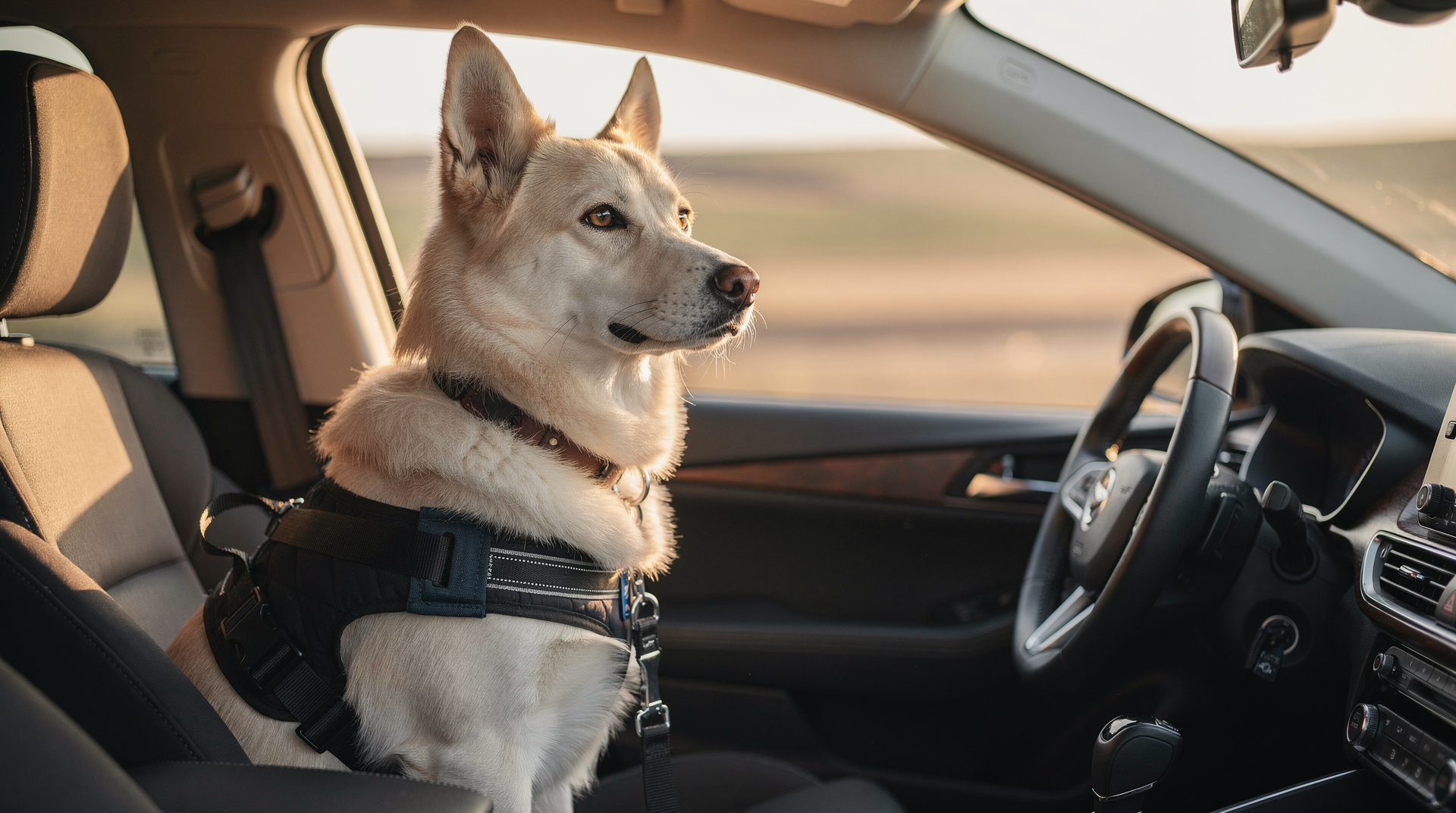
Even the simplest pre-departure ritual should be executed with spatial calm and clear leadership. Load the car with the dog absent if clutter creates excitement, because a chaotic environment raises vigilance before the animal is even introduced. Use a secure harness, crate, or barrier appropriate to size and temperament, since restraint is not punishment but injury prevention for the cervical spine, rib cage, and limbs in the event of sudden braking. Check that the dog can stand, lie down, and turn without being thrown from side to side, because constant bracing activates core musculature and contributes to fatigue, especially in older dogs with sarcopenia. If the route is long, plan the sequence of rest stops in advance, not reactively; the dog should not be asked to wait until it is desperate to void, dehydrated, or overheated. A dog that has been properly emptied, cooled, secured, and mentally settled carries into the journey a far lower burden of stress hormones, inflammation, and preventable instability than one who is simply placed and left to cope.
For puppies, the challenge is developmental rather than merely logistical. Their immune systems are still maturing, their thermoregulation is less efficient, and their emotional imprinting is occurring at a speed that can either build resilient confidence or encode lifelong avoidance. The early travel curriculum should therefore be brief, positive, and impeccably controlled, with no exposure so intense that it overwhelms the puppy’s ability to recover. For geriatric dogs, preparation must respect the shrinking margin between comfort and collapse: reduced hearing and vision amplify startle responses, renal concentrating ability makes dehydration more dangerous, and pain from degenerative joints can be masked until the dog is required to leap, twist, or hold posture for too long. In both age groups, the measure of good preparation is not enthusiasm; it is composure. When the dog steps toward the journey with soft eyes, loose musculature, and the quiet confidence that the human has already arranged the world, the body is no longer bracing against the unknown, and this is where safe travel truly begins.
Once the journey is underway, vigilance must become rhythmic rather than anxious, because the traveling dog is not a static object but a living thermoregulatory, circulatory, and emotional system in motion. Heat is the quietest assassin in transport: canine bodies dissipate warmth poorly compared with human bodies, relying chiefly on panting and a limited amount of peripheral vasodilation, which means enclosed vehicles, direct sun, asphalt radiance, and stalled traffic can push a dog from comfort into cellular distress with alarming speed. The first organs to protest are not always the most obvious ones. The brain becomes irritable, the gut slows, the heart rate climbs, and the blood thickens as evaporative loss continues without adequate replenishment. A dog that is overheating may not collapse dramatically at first; instead, it becomes glassy-eyed, restless, and unusually quiet, then begins to drool more, pant harder, and seek escape by pacing or pressing against barriers. In that moment, leadership is not optional. The vehicle must be cooled, the dog removed to shade, water offered in measured quantities, and if signs progress to weakness, vomiting, disorientation, or bright red or pale gums, immediate veterinary attention is required. Heatstroke is not a dramatic event only after it becomes visible; it is already injuring the endothelial lining, the liver, and the coagulation system long before the body falls apart.
Hydration should be managed with the discipline of a clinician, not the sentimentality of a picnic. Dogs do not need to drink every time a human thinks of water; they need access that’s regular, clean, and proportional to stress level, ambient temperature, and travel duration. Small, frequent offerings are superior to one enormous bout of drinking because they reduce gastric slosh, regurgitation risk, and the frantic behavior that follows thirst. In dogs with short muzzles, laryngeal tissue redundancy, or a history of airway noise, overdrinking immediately before exertion can worsen respiratory compromise, so pauses should be calm and controlled. For dogs with kidney disease, diabetes, or chronic endocrine disorders, travel water management is part of medical maintenance, because dehydration magnifies renal hypoperfusion, glucosuria, and electrolyte instability. The observant handler reads the mouth, not merely the bowl: tacky mucous membranes, sunken eyes, and thick saliva are early signs that fluid balance is slipping. A dog kept properly hydrated maintains more stable perfusion to the kidneys, gut, and brain, and that stability is what makes the difference between a resilient traveler and a patient in metabolic trouble.
Motion sickness deserves more respect than it usually receives, because it isn’t just a matter of queasiness but a disagreement between the vestibular apparatus and the visual and proprioceptive systems. When a dog’s inner ear detects motion that the eyes do not predict, the autonomic nervous system may recruit nausea as a primitive protective response. Puppies are especially vulnerable because their vestibular circuitry is still maturing, and many outgrow the condition as the brain learns to integrate motion more gracefully. Until then, the practical answer is not punishment for drooling or whining, but reduction of sensory conflict: stable positioning, forward orientation when possible, visual access to the horizon if safe, and avoidance of spinning the dog’s body during loading. A nervous dog and a nauseated dog are often intertwined; once a dog has vomited in the car, anticipation alone can provoke the same response on future trips through conditioned autonomic memory. In stubborn cases, a veterinarian may recommend antiemetic support or behavior modification, but the deeper lesson remains the same: the body learns travel by repetition, and each successful trip rewrites the vestibular threat map.
The gastrointestinal tract is a second brain in the most literal sense of the phrase, and travel can unsettle it with a cascade of stress hormones, altered motility, and microbiome disruption. The dog that refuses food after arriving may be expressing more than homesickness; transient stress can slow digestion, alter bile flow, and shift the intestinal environment toward dysbiosis, especially in sensitive dogs. Some dogs respond with loose stool, others with constipation, and some with colitis so mild at first that owners dismiss it until the stool becomes mucous-laden or streaked with blood. A dog with a history of inflammatory bowel disease, pancreatitis, or food intolerance should not be fed improvisationally on the road. Bring the familiar diet, preserve the feeding routine as closely as possible, and watch the stool like a clinician watches a chart, because stool is not waste alone; it is evidence. A change in frequency, color, consistency, or urgency may reveal stress, infection, dehydration, or a dietary misstep long before the dog becomes overtly ill.
Movement breaks are not a luxury on long trips; they’re an orthopedic and neurologic necessity. A dog confined too long develops static fatigue in the postural muscles, compression in the lumbar spine, reduced venous return in the limbs, and escalating irritability that often masquerades as disobedience. The break must be structured. Let the dog decompress on leash, sniff, urinate, stretch, and reset the vestibular system away from constant vibration. Sniffing is not a distraction from the break; it is the break. It organizes the cerebral cortex, reduces stress arousal, and allows the dog to map the environment in a way that lowers the internal pressure of uncertainty. For dogs with arthritis, hip dysplasia, cruciate disease, or spondylosis, these pauses prevent stiffness from becoming a compensatory gait and protect the joints from the inflammatory swell that follows prolonged immobility. For seniors, the handler should watch for subtle markers such as difficulty resuming a seated position, shortened stride, toe scuffing, or reluctance to climb back into the vehicle, because pain in the older dog is often communicated through economy of motion rather than complaint.
Oral health deserves deliberate attention before, during, and after travel because the mouth is not an isolated cavity; it is a biologic port where the external world enters the bloodstream. Plaque is a living biofilm, not a cosmetic nuisance, and when pathogenic bacteria and inflammatory mediators persist along the gingival margin they can contribute to periodontal disease, which is linked to chronic inflammation in the heart, kidneys, and liver through repeated bacteremia and immune activation. A dog that is traveling with neglected oral disease may show halitosis, pawing at the mouth, drooling, chewing on one side, or dropping food, but those signs often appear only after the disease has advanced. More subtle are the changes in temperament: a dog that resists collar pressure, avoids hard treats, or flinches during using may be communicating jaw pain or inflamed gingival tissue. Practical travel medicine therefore includes oral inspection, continuation of at-home dental hygiene when possible, and attention to breed predispositions such as retained teeth, crowded incisors, and small mouths with accelerated periodontal collapse. A few days on the road will not create dental disease, but they can expose a preexisting problem by interrupting the dog’s coping reserve, and what appears to be anxiety may in fact be pain with a mouthful of bacteria behind it.
Cardiopulmonary risk rises in any dog whose reserve is already narrowed, and travel can reveal the fault line. A dog with a soft murmur may seem stable until stress, heat, or prolonged excitement increases heart rate and shortens diastolic filling time, reducing the efficiency with which oxygenated blood reaches the tissues. Dogs with collapsing trachea, laryngeal dysfunction, pulmonary disease, or brachycephalic anatomy face a different but equally serious burden: the act of panting, which should cool the body, can become an airway struggle that worsens anxiety and oxygen debt. Watch for coughing after drinking, noisy breathing, blue-tinged mucous membranes, excessive salivation, or a dog that refuses to lie down and instead stands braced with neck extended. Those are not merely inconvenient behaviors; they are physiologic alarms. In such dogs, travel should be timed to avoid extremes of temperature and delay, and any preexisting cardiac or respiratory condition should be reviewed with a veterinarian so that medication timing, rest intervals, and emergency contingencies are not left to chance. The best travel plan for a compromised heart or airway is one that reduces the need for the body to compensate at all.
Behavioral safety is as essential as physical safety, because the frightened dog can become a dangerous dog not by malice but by self-defense. An unfamiliar environment can strip a dog of social confidence, and a dog that’s cornered, overhandled, or pulled through crowded spaces may resort to growling, snapping, or rigid avoidance. Those responses should be interpreted with clinical seriousness. Fear aggression is often the final layer of a longer sequence: first the dog scans, then freezes, then avoids, and only when escape is impossible does it escalate. The human who understands this sequence prevents bites by noticing it early. Give space before the dog has to demand it, and never force greetings, touching, or public attention on a dog whose body is already speaking through a tight mouth, dilated pupils, pinned ears, or a tail held low and still. The nervous system calms when the dog learns that its signals are honored; when signals are ignored, the dog learns that escalation is the only language left. That is true in airports, hotel lobbies, rest areas, and family gatherings alike.
There is also the matter of parasites and infectious exposure, which becomes particularly relevant when travel carries the dog across climates, regions, or ecosystems. Tick-borne disease risk shifts with geography and season; mosquito exposure introduces the possibility of heartworm transmission in many areas; and standing water, communal boarding zones, and high-traffic pet spaces can elevate exposure to gastrointestinal or respiratory pathogens. Preventive medications should be current and appropriate to the destination, because a lapse in parasite control can turn a brief trip into a monthslong medical burden. After arrival, a careful body check is not paranoia but good husbandry: inspect ears, paw pads, groin, axillae, and the coat line for ticks, foxtails, burrs, abrasions, or hot spots. A foreign grass awn in the ear canal or between the toes can produce violent shaking, head tilt, or relentless licking, and if missed early it can migrate, abscess, or penetrate deeper tissue. Travel exposes the dog to biology the home environment does not, and good prevention means reading the body after the environment has had its say.
Endocrine and metabolic patients require especially disciplined observation because travel compresses variables that these dogs cannot absorb easily. A diabetic dog must have insulin timing synchronized with meal intake and activity level; missed meals or delayed travel can precipitate hypoglycemia, while stress and altered routine may drive counterregulatory swings in the opposite direction. Addisonian dogs, whose adrenal insufficiency leaves them vulnerable to crisis when stress and dehydration converge, should travel only with explicit veterinary planning, access to emergency care, and a clear understanding of when weakness, vomiting, or collapse is no longer simply travel fatigue. Obese dogs, though often underestimated, carry their own burden: excess adipose tissue is metabolically active, amplifying inflammation, straining the joints, and reducing thermoregulatory efficiency. A fat dog in a hot vehicle is not just uncomfortable; it is biologically disadvantaged at every turn. Travel can be a useful mirror here, revealing which body systems have been quietly carrying too much weight, too little reserve, or too much unrecognized disease.
In practice, the dog that remains safest is the one whose human notices the small deviations before they become crises. The nose that normally stays moist but becomes dry and crusted, the posture that normally springs but now hesitates, the gait that shortens, the bark that disappears, the appetite that drifts, the glance that fails to meet yours because the animal is too tired to engage—these are the first sentences in the story of trouble. The veteran hand does not wait for collapse; he interrupts the sequence. He cools, pauses, hydrates, repositions, reassesses, and if necessary changes the plan, because loyalty in travel is not the refusal to alter course, it is the willingness to protect the dog even when the itinerary must bend. In the field, the best safety measures are those that preserve the dog’s dignity while defending the body from the accumulated insults of stress, motion, heat, restraint, and unfamiliarity.
Related Posts

Certified Home Compostable Dog Poop Bags

The Link Between Diet and Canine Behavior